First distinguish signal faults from process anomalies
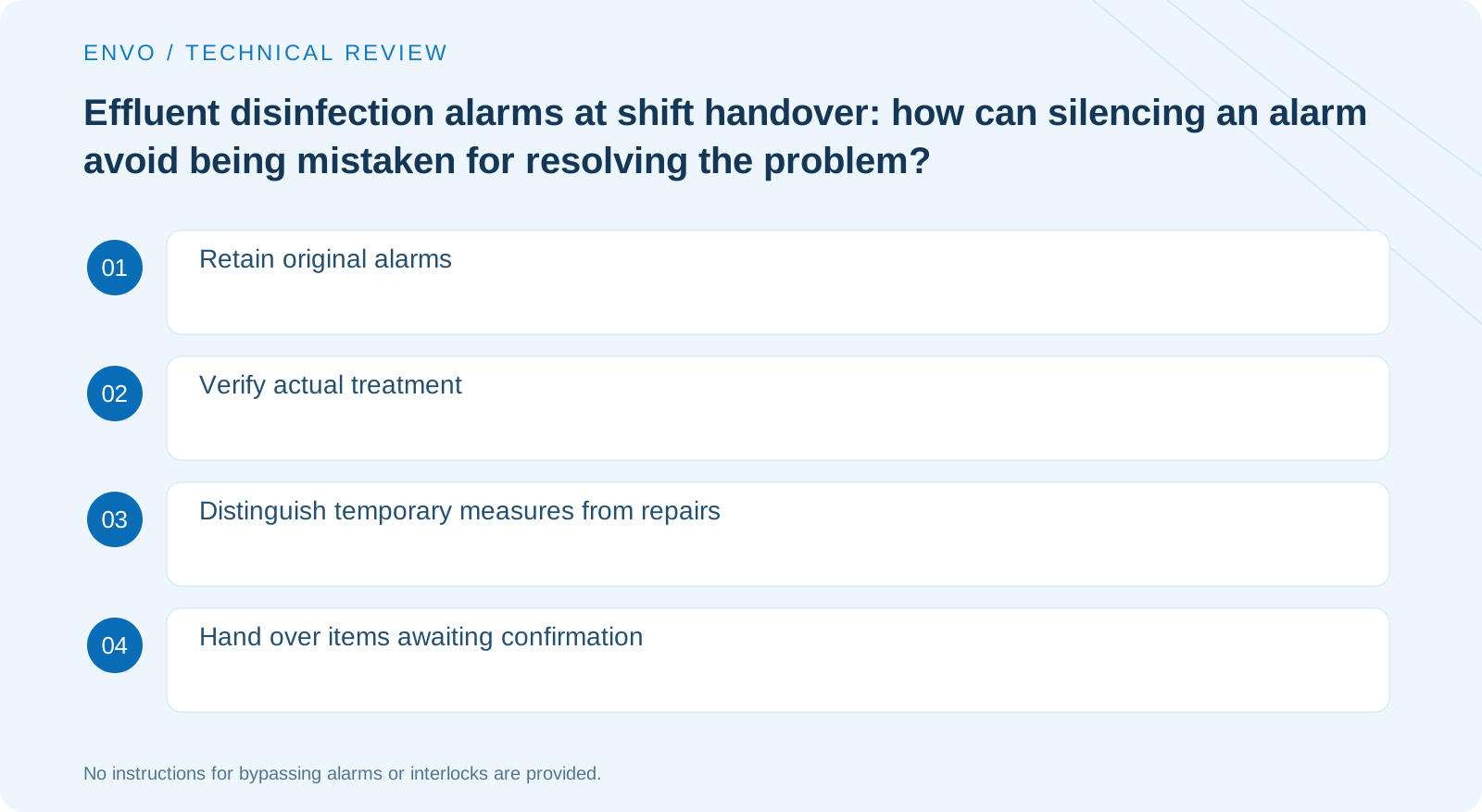
Record alarm name, equipment identifier and time, determining whether it concerns sensors, metering, power, communications or process indicators. Initial classification guides follow-up responsibility but does not replace inspection. Preserve original alarms and trend screenshots rather than writing only 'handled' in the shift log. If the cause is unknown, state that rather than marking recovery confirmed.
Check actual treatment status and alternative monitoring
Follow plant procedures to confirm controlled operation, bypasses, data gaps and required manual verification. Different routes fail differently; one generic emergency chemical approach cannot replace assessment. EPA disinfection guidance relates effectiveness to water quality and equipment conditions, so an alarm-free control panel alone does not establish treatment outcomes.
The handover form can separately record four times: when the alarm first occurred, when personnel acknowledged it, when the site inspection took place and when operation was restored. Retain flow rates and water destinations during this period. An alarm clearing after a restart indicates only a change in equipment status; it does not automatically fill gaps in water-quality evidence. Retain original identifiers for recurring alarms to distinguish repeated occurrences of one fault from multiple independent events.
Separate temporary measures from permanent repairs
Temporary measures should have an owner, a time limit and conditions of applicability, with clear triggers for further assessment. After equipment repair, confirm monitoring reliability and process recovery; replacing a component alone does not close the incident. Discharge decisions must follow applicable permits and plant requirements. Remote supplier advice does not replace on-site management responsibilities.
Verify information transfer by having the incoming shift repeat it back
Handovers can cover current status, unfinished items, next check and escalation contact, with incoming personnel confirming understanding. Highlight modified automation, disabled sensors and temporary dosing. Manage such departures under controlled procedures so the next shift does not unknowingly continue changes without their rationale.
Address common alarms in purchasing and training
New-equipment inquiries should require clear alarm descriptions, maintenance documents and verifiable recovery logic, with training covering faults as well as startup. For recurring events, record associated conditions and response duration to support spares or modifications. Do not invent reliability rates or treat fewer alarms as direct proof of better water quality. Retain operational and quality evidence separately.
Explore further
Does an alarm clearing mean discharge conditions have been restored?
They are not automatically equivalent. Confirm treatment status and relevant water quality under the procedure.
Is a maintenance work order alone sufficient for shift handover?
Also describe current process status, data gaps and items awaiting confirmation.
References
This article draws on publicly available technical information. Third-party sources do not establish ENVO product approvals, field testing or project experience. Confirm each use against actual supply documents and site conditions.