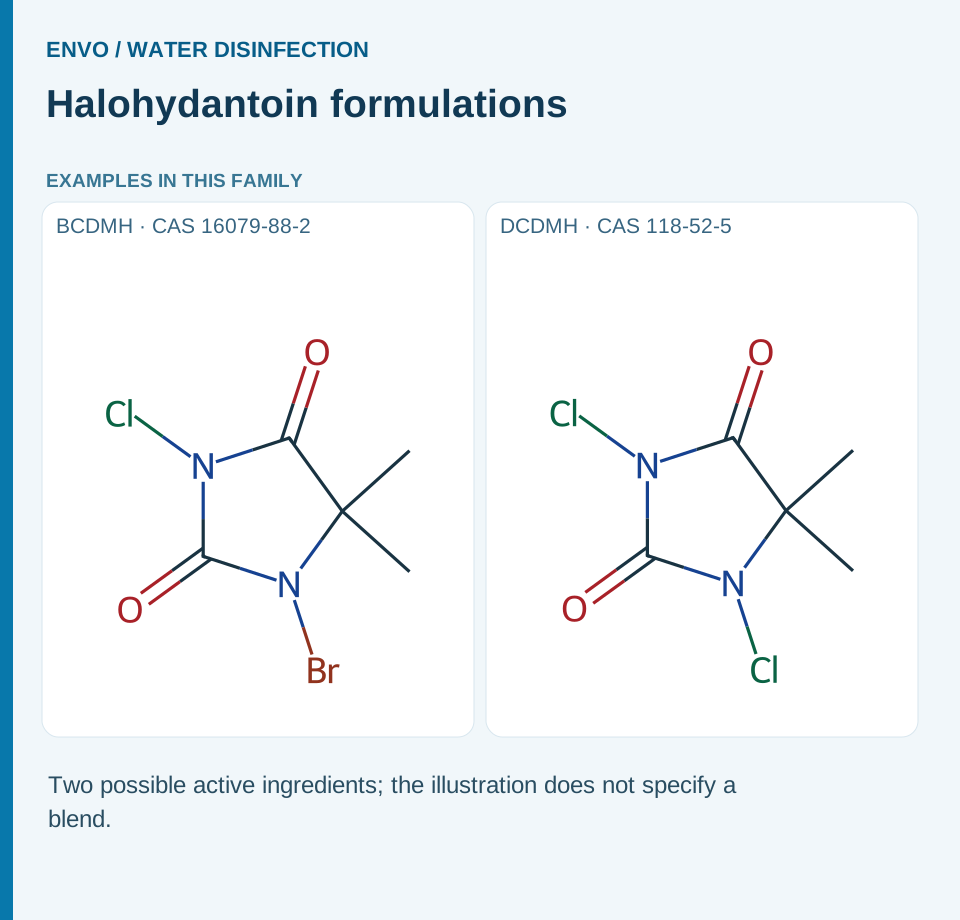
Do not let a product-family name conceal the ingredients
Historical EPA halogenated-hydantoin information covers different compounds and combinations, demonstrating diversity within the category. Blended products may require several active names for a complete description; similar names do not establish the same product. Request complete labels rather than cropped commercial names. Organize active and other ingredient descriptions from actual documents, without buyers guessing ratios or inventing formulations.
Distinguish ingredient ratios from oxidizing capacity
Ingredient percentages and available-halogen values expressed on particular bases have different meanings and cannot simply be added or substituted. Specifications should state test items, methods and units for the actual product. When several numbers appear, ask the supplier what each describes. Do not select the largest number as a universal content claim while omitting its definition and scope to emphasize an advantage.
Check photographs and documents together
Embossing, shape and dimensions on white tablets help identify a reference product but do not establish its active composition. If multiple formulations share a photograph, clarify whether it is illustrative or depicts the actual model to prevent mistaken identification. Labels, product documents and test records should jointly identify each delivered batch. A trade name in a website photograph does not automatically describe the current order's formulation. Leave unverified fields pending rather than inventing data.
Blend applications require evidence for the formulated product
A particular family member's use does not automatically authorize or qualify every mixture containing it. Independently verify finished-product restrictions, equipment requirements and monitoring methods. Historical family documents cannot replace current labels, and even one brand may have different configurations in different countries. Procurement should focus on the actual product supplied in the target market rather than assembling worldwide search results into an apparently complete approval list.
Turn label verification into an order attachment
Create a one-page mapping of complete active names, chemical identities, indicator definitions, dosage form, use documents and versions. Technical staff, procurement and the supplier should confirm it before quotations or substitution discussions. Review affected items when formulations change; an unchanged commercial name on the packaging does not automatically preserve an earlier assessment. This reduces the identity ambiguity common with blended products.
On bilingual labels, match active ingredient names and parameter definitions item by item; do not simplify an English blend description into a single substance in Chinese. The website backend can share a brand layout, but each formulated product's composition must be maintained independently. Otherwise a bulk renaming operation may lead customers to select an inconsistent formulation in their inquiries.
Explore further
Is available halogen alone a sufficient specification for blended tablets?
This does not fully explain composition and use. Check the specific active-ingredient identities.
Can authorization for one component cover any blended product?
No. Review documentation for the corresponding formulated product.
References
This article draws on publicly available technical information. Third-party sources do not establish ENVO product approvals, field testing or project experience. Confirm each use against actual supply documents and site conditions.