Visible film-like material is not a complete diagnosis
Color, odor or floating material may indicate an anomaly but cannot establish whether bacteria, fungi, other substances or several factors predominate. Buckman's metalworking literature distinguishes different formulated biocides and fungal applications, illustrating the need to identify the target. Appearance alone does not justify a generic TCMTB recommendation, and mold-control information for other materials cannot become a guarantee of complete metalworking-fluid control.
Make testing answer actual site questions
Competent personnel should select relevant microbial methods and define sampling locations, times and handling, explaining what each method observes and cannot exclude. Bacterial results alone may not establish absence of fungi; finding fungi does not make them the cause of every anomaly. Combine testing with operation, replenishment, cleaning and maintenance records rather than placing too many conclusions on one test.
Check the current working solution against the commercial product's intended use
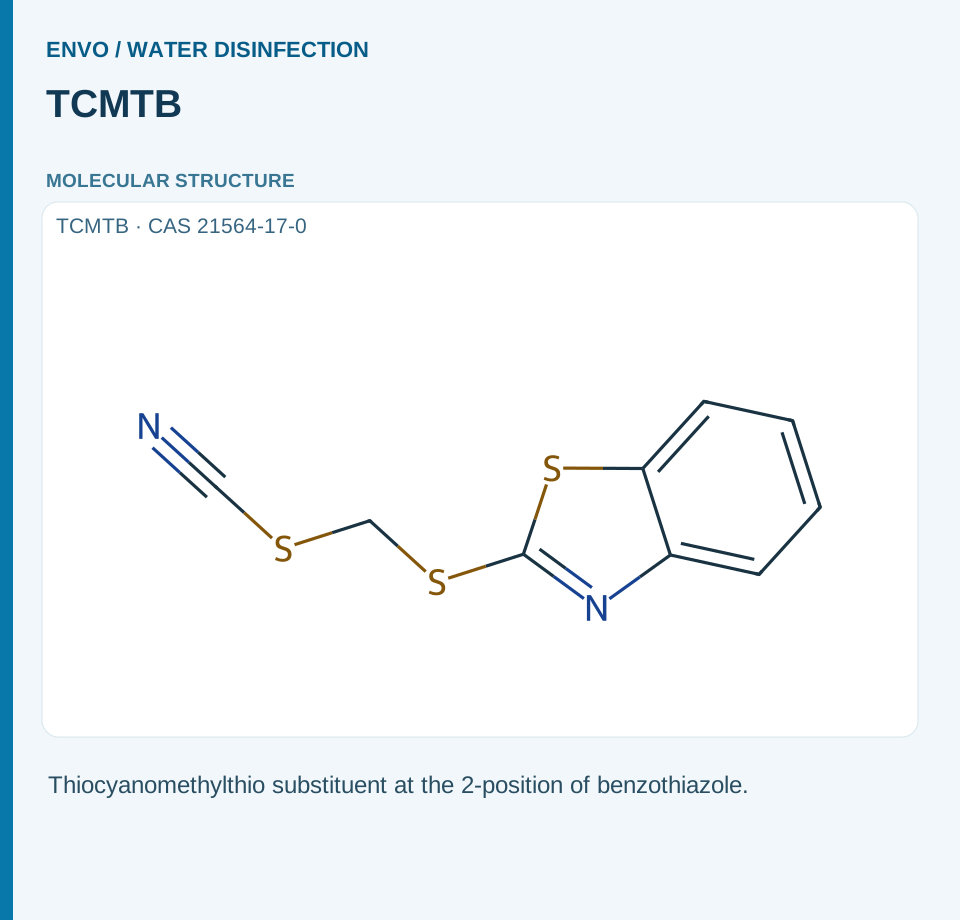
Specific TCMTB formulations may have defined metalworking applications; the active name does not establish that every formulation suits the current system. Confirm metalworking-fluid type, actual use stage, other treatment products and equipment materials against the corresponding label. Keep leather-industry or other technical data in its original use context; shared fungal-control objectives do not automatically make it applicable to the current water-based metalworking fluid.
Validation must extend beyond short-term appearance
Design procurement trials around actual objectives, recording observations, tests, before-and-after conditions and necessary process performance. Appearance improvements may come from cleaning or other measures and cannot all be attributed to the new chemical. Short-term results do not remove future maintenance needs. If metalworking fluid and system-cleaning procedures change together, disclose that combination rather than claim a permanent effect from one product.
Turn site information into an effective inquiry
Provide working-fluid information, completed tests, anomaly locations, maintenance history and target market, asking suppliers to confirm available products and evidence. Customers need not identify the microorganism first; reliable observations and reports allow the technical process to narrow the issue. This is more likely to produce a suitable program than a generic request for the strongest biocide and reduces repeated delivery of irrelevant use documents.
If the site has only a report generically labeled 'total bacteria,' first ask the laboratory to explain the method's coverage, then decide whether additional fungal testing is needed. Purchasing staff should not interpret 'total bacteria' as an assessment of all microorganisms. Method names, sample origins and limits of interpretation are more important to technical communication than the report cover.
Explore further
Can bacteria and fungi in machining fluids be distinguished by eye?
Appearance generally cannot support a reliable judgment; appropriate testing is also needed.
Can leather mold-protection information directly establish suitability for processing fluids?
No. The specific formulated product must match the conditions of use.
References
This article draws on publicly available technical information. Third-party sources do not establish ENVO product approvals, field testing or project experience. Confirm each use against actual supply documents and site conditions.