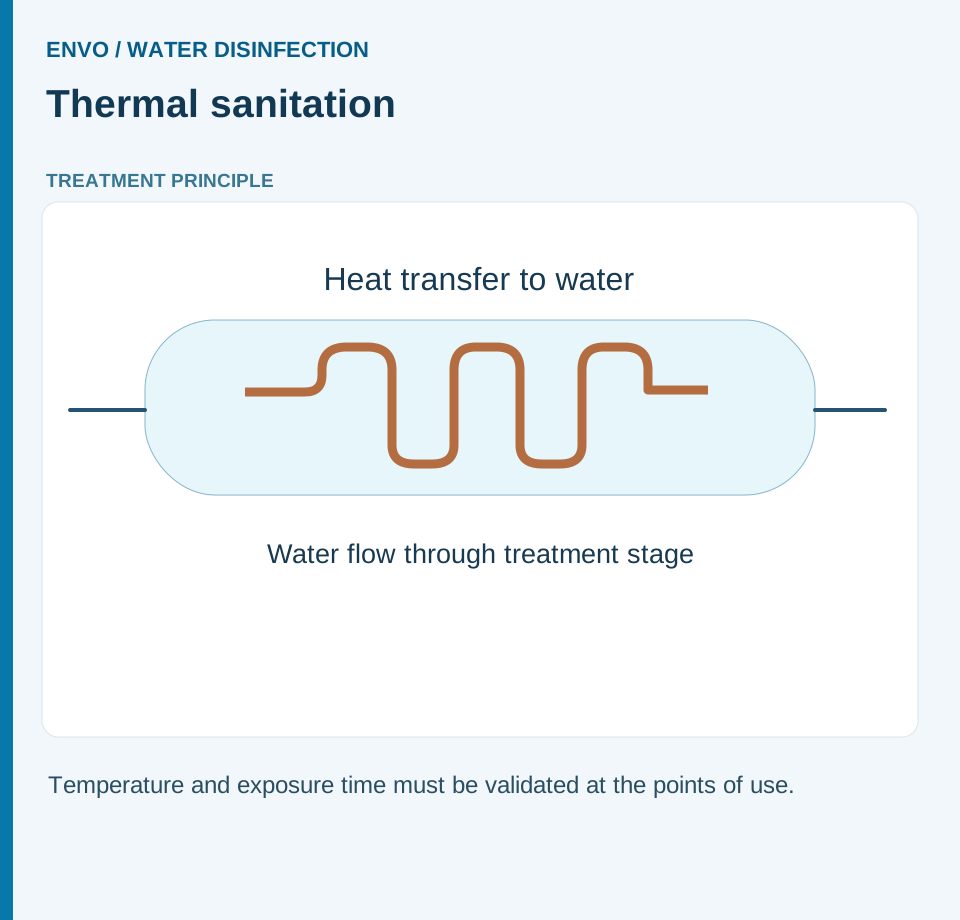
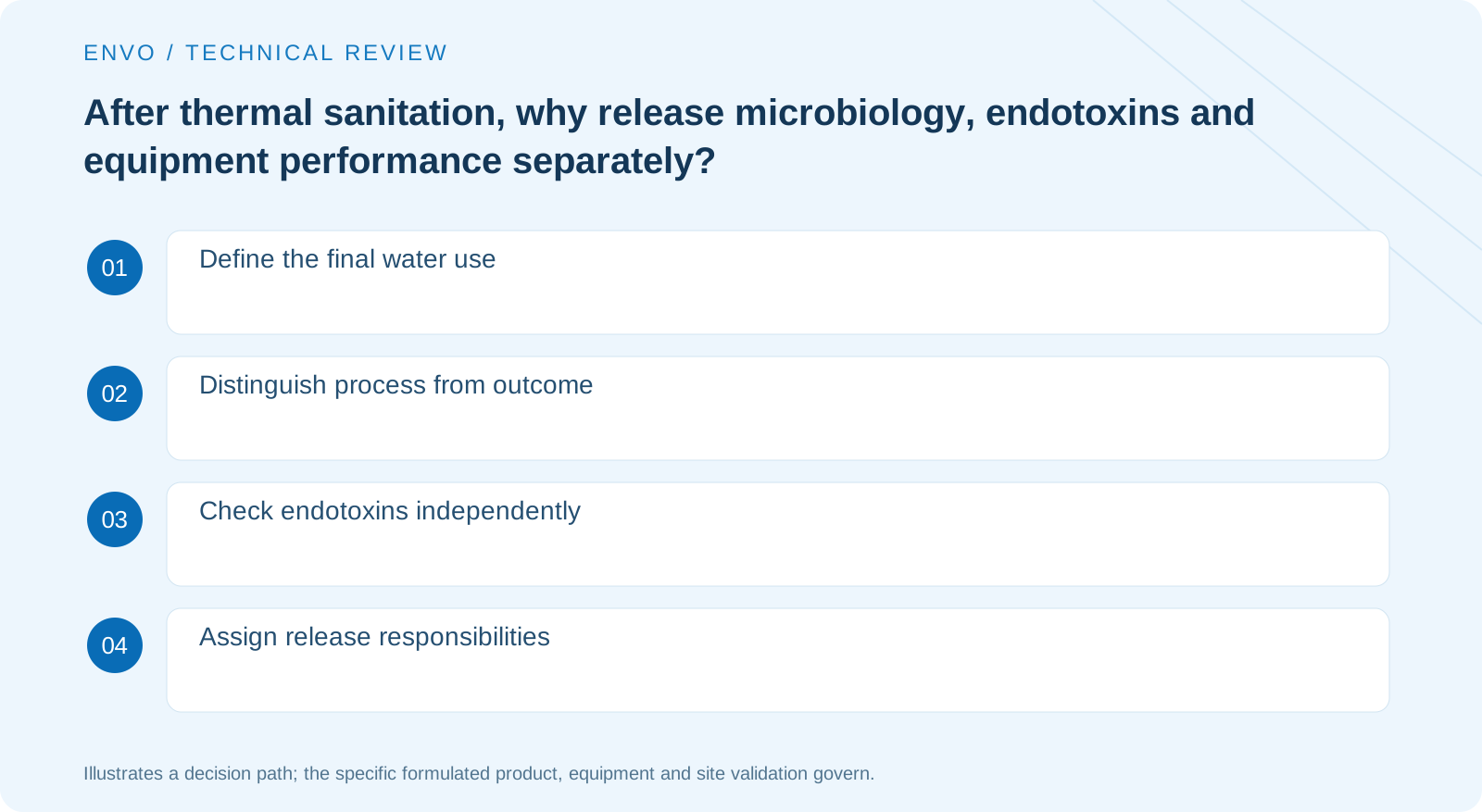
First specify the final water use
Pharmaceutical water, ultrapure water and medical equipment do not share one quality system. Define the product's or equipment's water-use purpose, then have the relevant quality personnel determine release parameters. Calling them all 'clean water' does not justify one acceptance form.
Distinguish process records from outcome verification
Cycle records show how the thermal program was executed; water tests show the relevant results for the samples taken; equipment performance shows system recovery. These three types of information support but do not replace one another. 'Complete' on the control screen alone cannot establish suitability of the final water for use.
Do not equate microbial reduction with endotoxin removal
Microbial activity and endotoxins are different assessment targets; thermal sanitation does not automatically eliminate all endotoxins. Necessary methods, sampling and acceptance conditions must follow the specific use and quality system. A website cannot set a universal threshold.
Define clear release responsibilities
During procurement and validation, specify who reviews the cycle, confirms water quality and approves return of the equipment to use, and how abnormalities are handled. Explicitly retain any gaps in evidence rather than concealing them behind other satisfactory results. This gives the site complete release conditions instead of an easily misunderstood 'disinfected' button.
Prepare three separate assessment questions before resuming use
First, was the equipment-approved procedure fully completed with verifiable records? Second, do applicable data support pre-use water quality and microbial requirements? Third, are equipment and downstream circuits suitable for restart? Temperature logs alone cannot answer the latter questions, and one passing sample cannot conceal missing process records.
Sampling plans should explain relationships among location, purpose, method and restoration status, with the user confirming actual-use requirements. Pharmaceutical, medical and general engineering-water requirements are not interchangeable, and CDC medical-equipment literature cannot certify unrelated devices. Preserve method limits when interpreting results instead of reducing every microbial issue to an undefined sterile conclusion.
Release records should identify each item of evidence, reviewer roles, unfinished issues and subsequent monitoring. For first restart after procedural changes or repairs, confirm that existing validation still covers the system. This connects purchased equipment and maintenance services with the user's quality process rather than delivering only a screenshot of thermal disinfection.
Explore further
Can all uses resume immediately after the thermal program is completed?
Meet the water-quality and performance release requirements of the specific use.
Do compliant microbial counts mean endotoxins are also compliant?
No. Each requires its own appropriate assessment.
References
This article draws on publicly available technical information. Third-party sources do not establish ENVO product approvals, field testing or project experience. Confirm each use against actual supply documents and site conditions.