First link process failure to the relevant test parameters
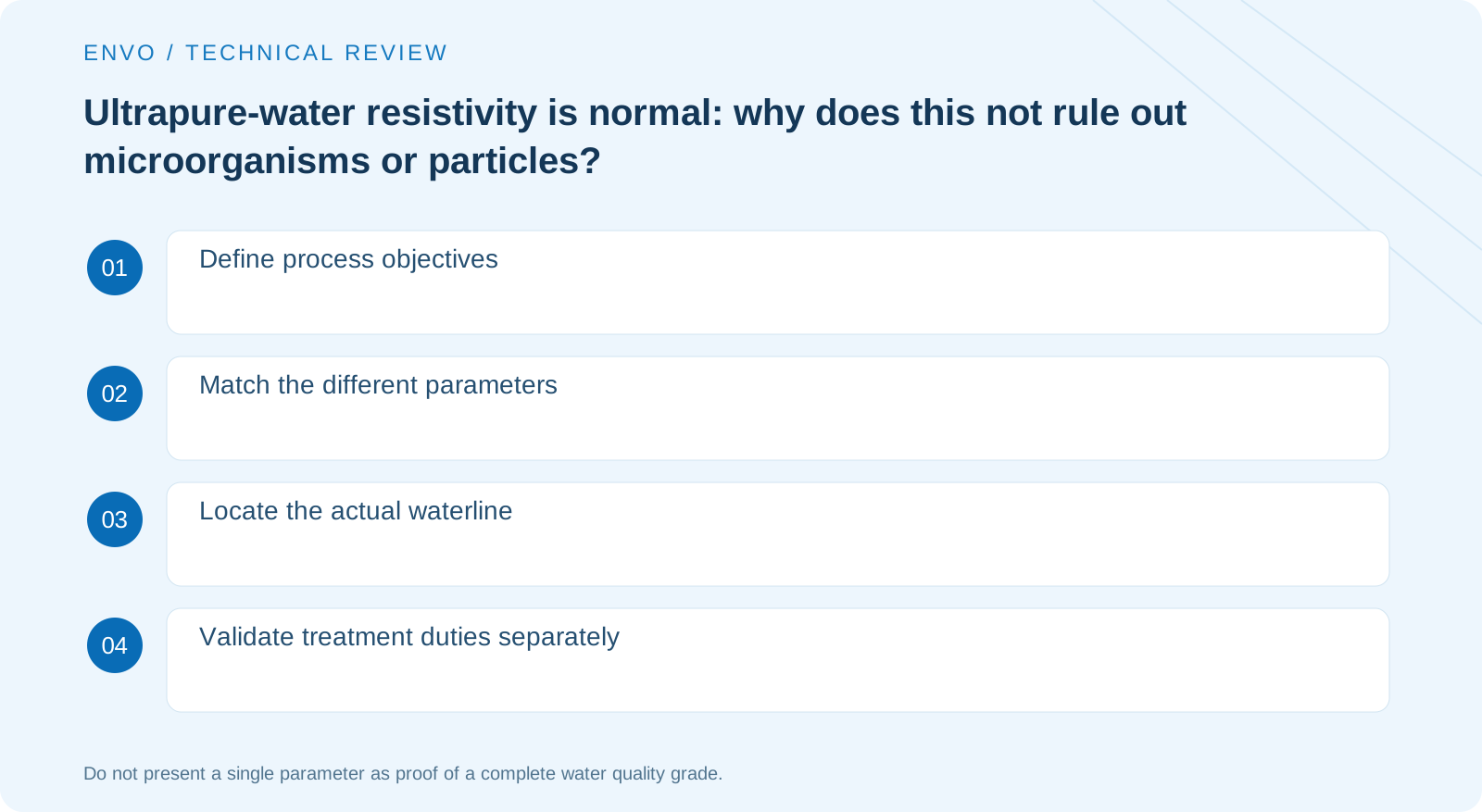
Clarify whether the issue concerns wafer cleaning, precision equipment, analytical blanks or another use, and list water-quality criteria already specified for that process. Samsung's ultrapure-water introduction describes control of multiple impurities, not ions alone. Map each indicator to the question it answers and identify gaps rather than using one reading as shorthand for all water quality.
Check the distance between the online monitoring point and final point of use
Online monitoring may sit at the production outlet while water subsequently passes through tanks, loops, valves or hoses. Map these stages and sample points to establish whether anomalous samples represent the same circuit section as the instrument. Update scope after process modifications or new branches rather than retain outdated representativeness assumptions.
Anomaly records should identify whether resistivity came from a main-line online instrument or temporary point-of-use measurement, with temperature compensation and method details. If microbial results came from another branch, they initially represent different locations. Align space and time before discussing unsynchronized parameters rather than create an unsupported relationship between two values.
Distinguish method differences from system changes
Before comparison, confirm methods, ranges, sampling containers and handling conditions. Low-level contamination testing especially requires strict sampling control; ordinary containers cannot be substituted casually. Retain original records and investigate the measurement chain when an indicator changes abruptly. Do not delete anomalies to make data agree or immediately replace the entire treatment-product set.
Provide separate evidence for disinfection and removal duties
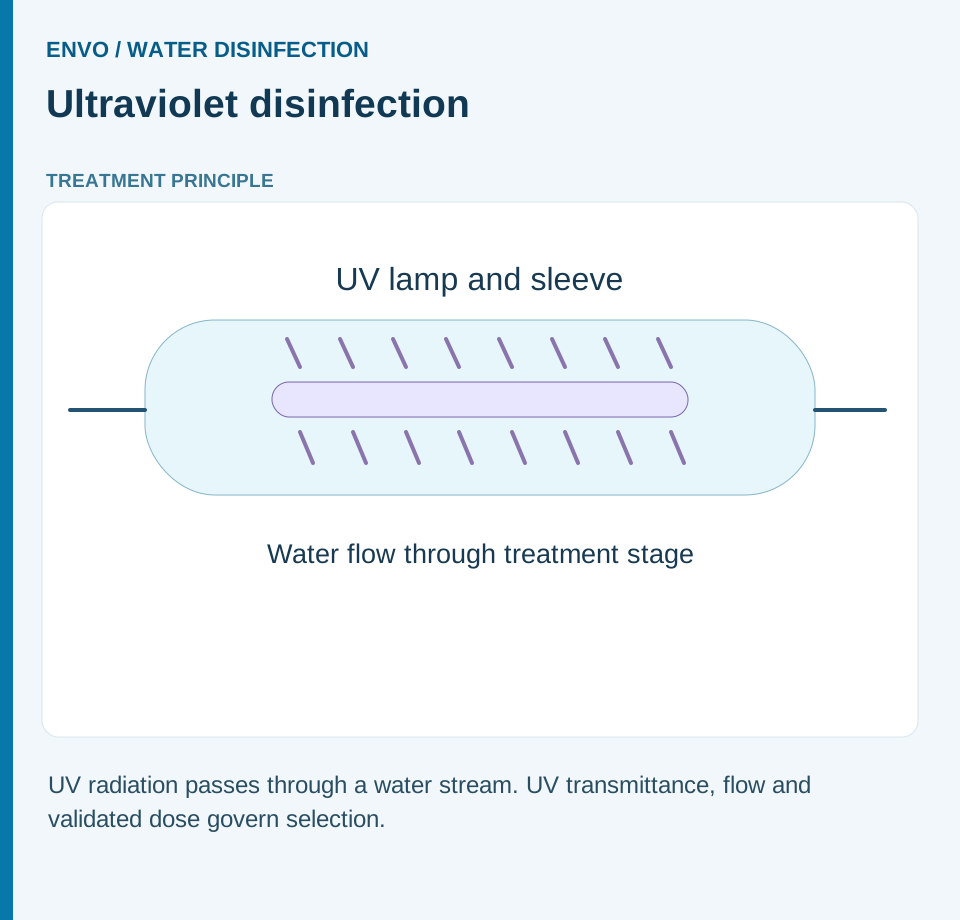
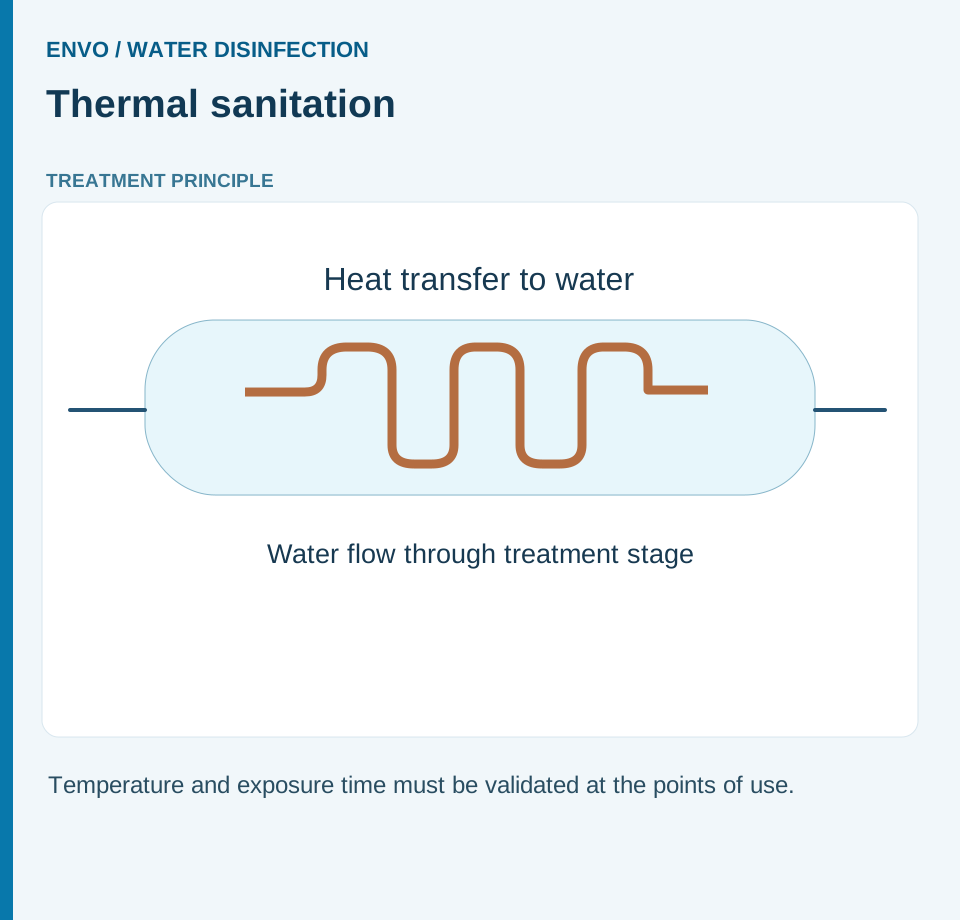
Microbial control, particle removal and organic control may need different steps and validation. Biocides do not automatically remove every impurity. Chemical and thermal candidates also require assessment of subsequent residues and materials. Define location and objectives rather than reduce quality management to stronger microbial killing.
Compile a data package for technical assessment
Provide actual use, process and sampling points, abnormal indicators and relevant changes, with instruments and methods identified. Suppliers can then define support and review needs rather than recommending a generic chemical from one resistivity value. Purity indicators should correspond to actual sampling points, methods and operating conditions. Concept diagrams or general laboratory information cannot replace evidence of site conformity.
Explore further
Does high resistivity mean sterile water?
No. Microbiological evaluation requires the corresponding methods and control requirements.
Do all high-purity waters use the same parameters?
Specific parameters and limits depend on actual use, equipment and process requirements.
References
This article draws on publicly available technical information. Third-party sources do not establish ENVO product approvals, field testing or project experience. Confirm each use against actual supply documents and site conditions.