Define the affected area before maintenance
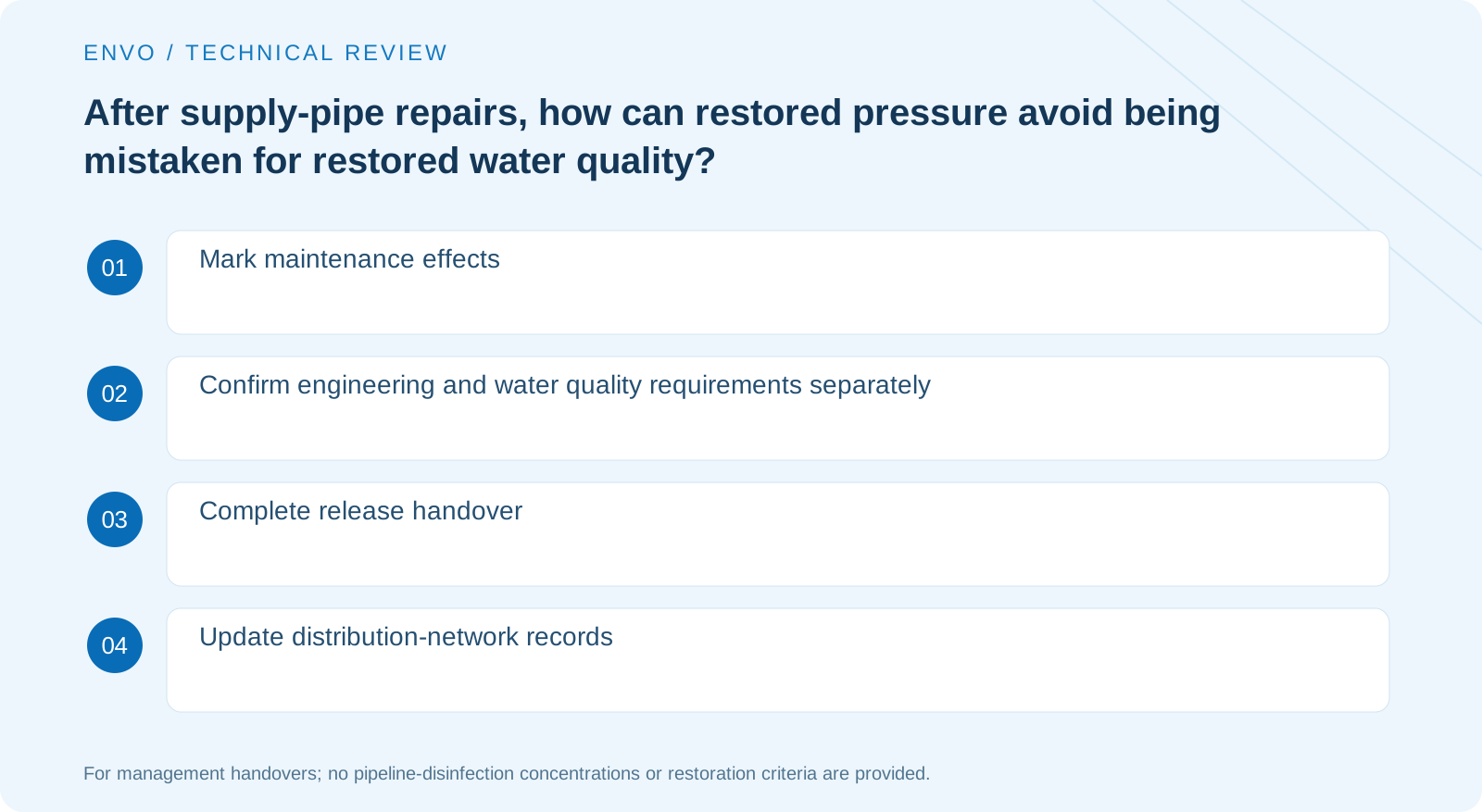
Map the repair section, upstream valves, bypasses, storage units and potentially affected users. Define isolated sections, areas retaining supply and how temporary supplies are distinguished. Resolve discrepancies between drawings and actual valves first. Subsequent water-quality validation should match the real impact area; a work order naming one leak does not justify ignoring connected branches.
Separate process completion from water quality release
Competent personnel should perform repair, flushing and disinfection under applicable requirements. Records must state completed and unverified work rather than close a work order merely as disinfected. EPA distribution resources describe multiple water-quality risks; pressure restoration, restored appearance and microbial or other verification cannot replace one another.
Connect responsible personnel through one release checklist
Construction, operations and water-quality managers should complete their respective checklist items: facility status, implemented procedures, sampling or testing basis, unresolved issues, restoration decision and notification time. Where external laboratories are involved, define receipt and reporting arrangements early. Without confirmed results, follow the existing abnormal-supply plan; awaiting a report is not acceptance passed.
Turn a maintenance intervention into traceable documentation
Archive pre- and post-repair flow paths, material information, anomaly photographs and tests, updating drawings to show whether temporary bypasses were removed or retained. Recurring endpoint issues can then be traced to components actually changed. Chemical-supplier inquiries should include repair scope and validation needs so advice does not rely only on whole-building volume while ignoring isolation and contact boundaries.
Retain the end condition for temporary measures in the work order
For temporary bypasses, sampling points or alternative water-supply arrangements introduced during repairs, separately record when they are removed, who confirms removal and whether site signage has been updated. If temporary measures remain in place, assign clear management responsibility; they must not disappear from oversight when the original leak is repaired and the work order closes. Keep pending reports visible with their responsible persons, and link completed items to actual evidence. This lets the next shift understand the system's real status and prevents the engineering completion date from being treated as the closure date for every water-quality issue.
Explore further
Can the advisory be lifted immediately after water pressure is restored?
Follow water-quality release and notification procedures. Restored conveyance does not replace safety verification.
Is a construction sign-off alone sufficient?
Responsibilities and evidence for water-quality review and supply restoration must also be defined. Specific documents depend on management requirements.
References
This article draws on publicly available technical information. Third-party sources do not establish ENVO product approvals, field testing or project experience. Confirm each use against actual supply documents and site conditions.