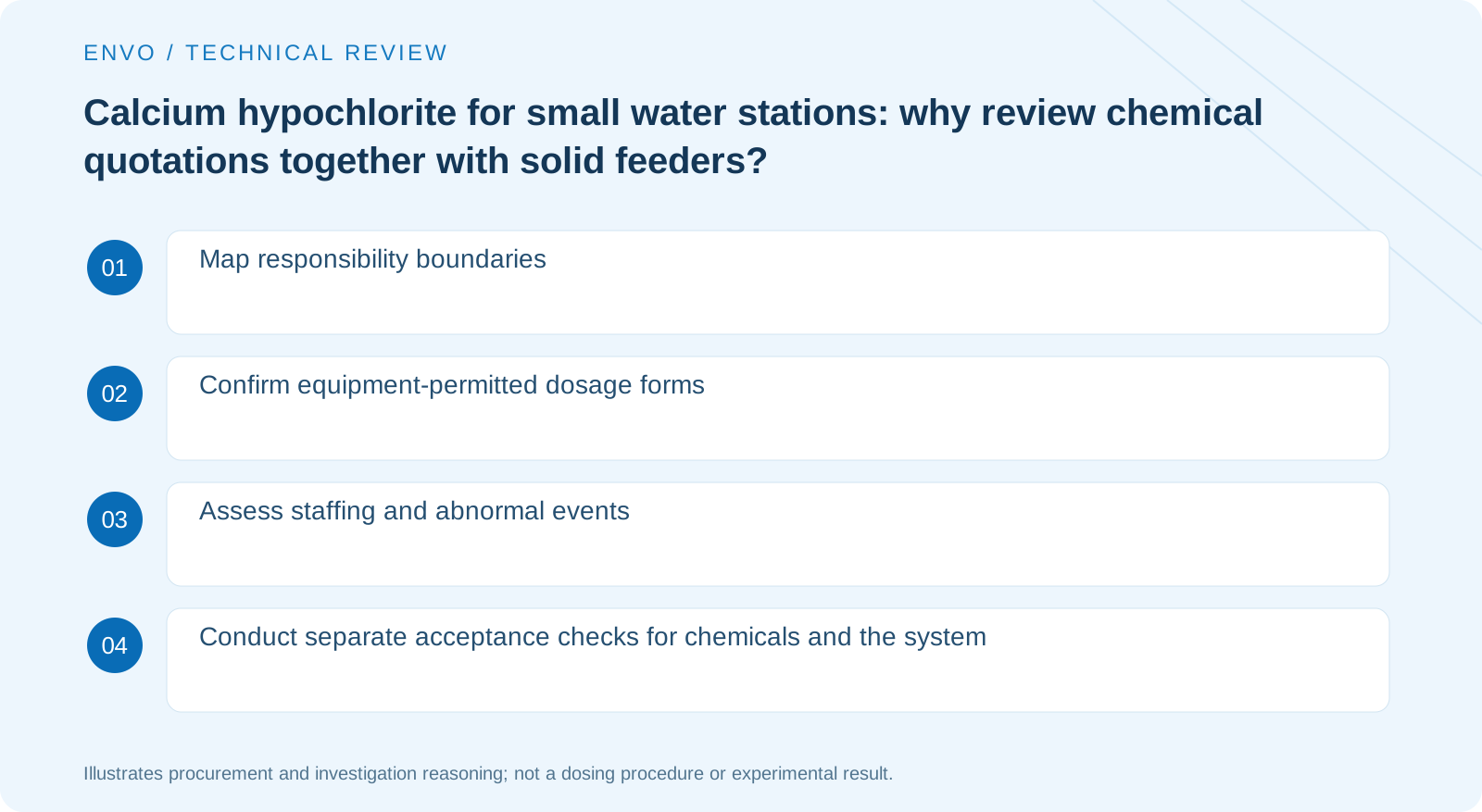
First map responsibility boundaries from the chemical to outlet water
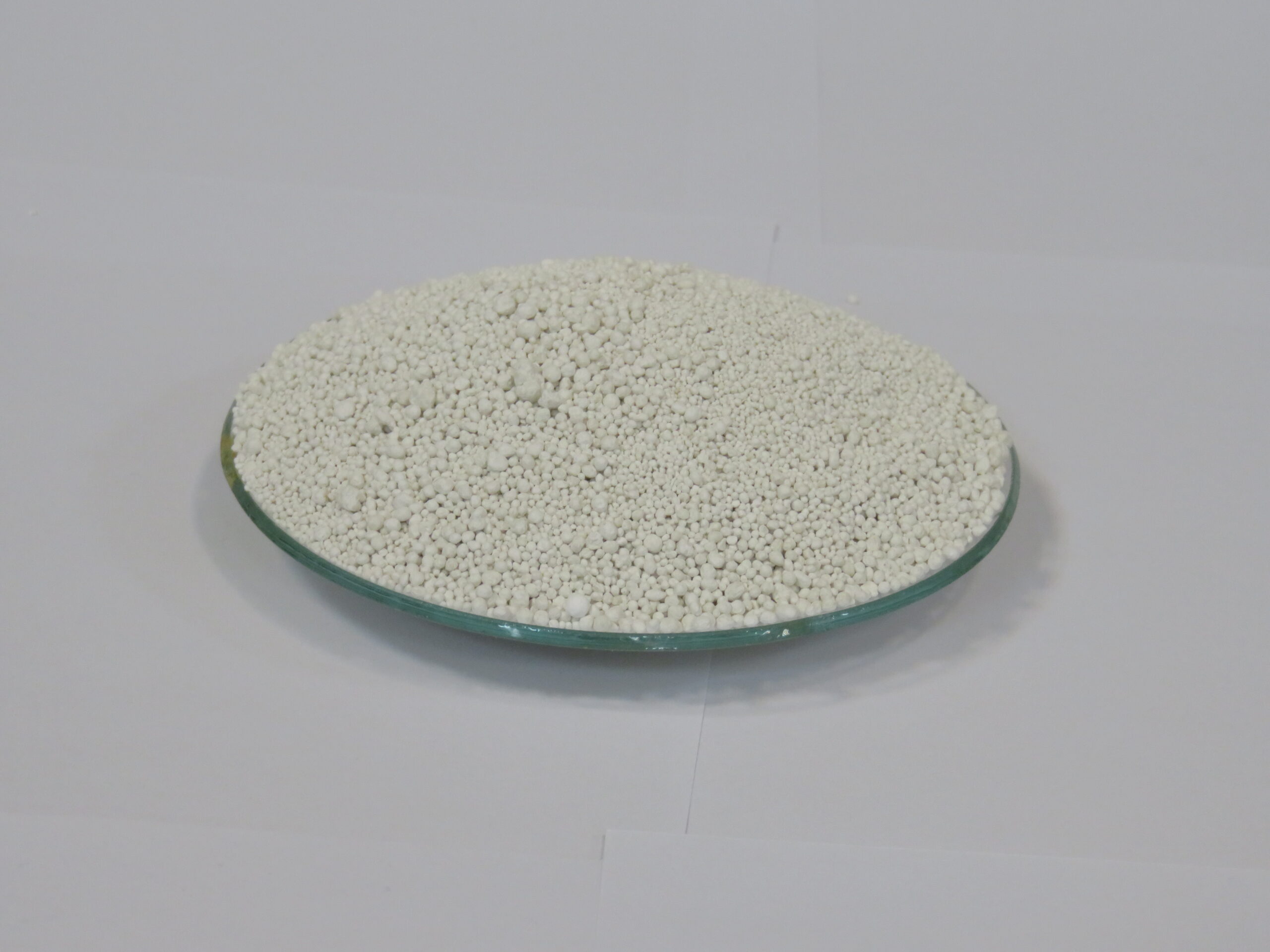
Procurement descriptions should cover storage, feeding, metering, contact and endpoint testing, identifying existing facilities and additions needed. EPA supply-chain information lists calcium hypochlorite as a solid water-treatment chemical, but purchasing the chemical does not supply a complete treatment system. Without defined metering and monitoring, available chlorine alone cannot determine the purchase.
Have the equipment supplier confirm permitted dosage forms
Granules and tablets may require different feeding and dissolution equipment. Provide complete equipment models and manufacturer-permitted material conditions. Review access for cleaning, maintenance and replacement parts, not just nameplate capacity. If maintenance requires shutdown, the station needs designed alternative supply or operating arrangements rather than improvised combinations of products to maintain chemical feed.
Assess the busiest periods and times with the fewest operators
Small water stations often face variable demand and limited staffing. Ask how anomalies are detected during peaks, low flow, power loss and equipment alarms. Trials should cover actual operating limits rather than show one stable-condition reading. Staff ability to understand documents, sample water and record maintenance affects long-term usability more than an attractive interface.
Define separate acceptance criteria for the chemical and the system
Chemical acceptance confirms model, use, batch and quality parameters; system acceptance confirms flow range, metering feedback, alarms and effluent testing. Link both through the same commissioning run without substituting either for the other. Source, end use, flow range and equipment photographs supplied to ENVO help distinguish a supply-only request from supporting work requiring engineers.
Define responsibilities after chemical-feeding equipment delivery
A proposal quotation should identify who confirms chemical and equipment compatibility, supplies operating documentation, and performs installation, commissioning and subsequent maintenance. Supplying a similar-looking solid chemical feeder does not establish that it may contact every chlorine-containing solid. Maintain traceable records of the chemicals, dosage forms and operating conditions approved by the equipment manufacturer, matched to the labels of the products actually supplied. If a customer later changes supplier or specification, first check whether equipment suitability needs reconfirmation; installation does not make equipment universally suitable forever. For small water stations with limited staffing, also verify that testing, spare parts and troubleshooting support can actually be provided. A low-priced package without these provisions may leave users to perform the remaining work. Procurement reviews should prioritize the complete delivery scope; a website cannot guarantee operating performance from equipment photographs.
Explore further
Can a small water station omit contact and testing facilities?
Scale alone cannot establish this. Treatment objectives and water quality determine the controls required, which must be implemented through suitable design, operation and maintenance.
Is tonnage and available chlorine alone sufficient for a purchasing contract?
Usually not for equipment-related purchasing. Formulation type, use documents, packaging and equipment-permitted conditions should also be specified.
References
This article draws on publicly available technical information. Third-party sources do not establish ENVO product approvals, field testing or project experience. Confirm each use against actual supply documents and site conditions.