Map where the two chemicals meet
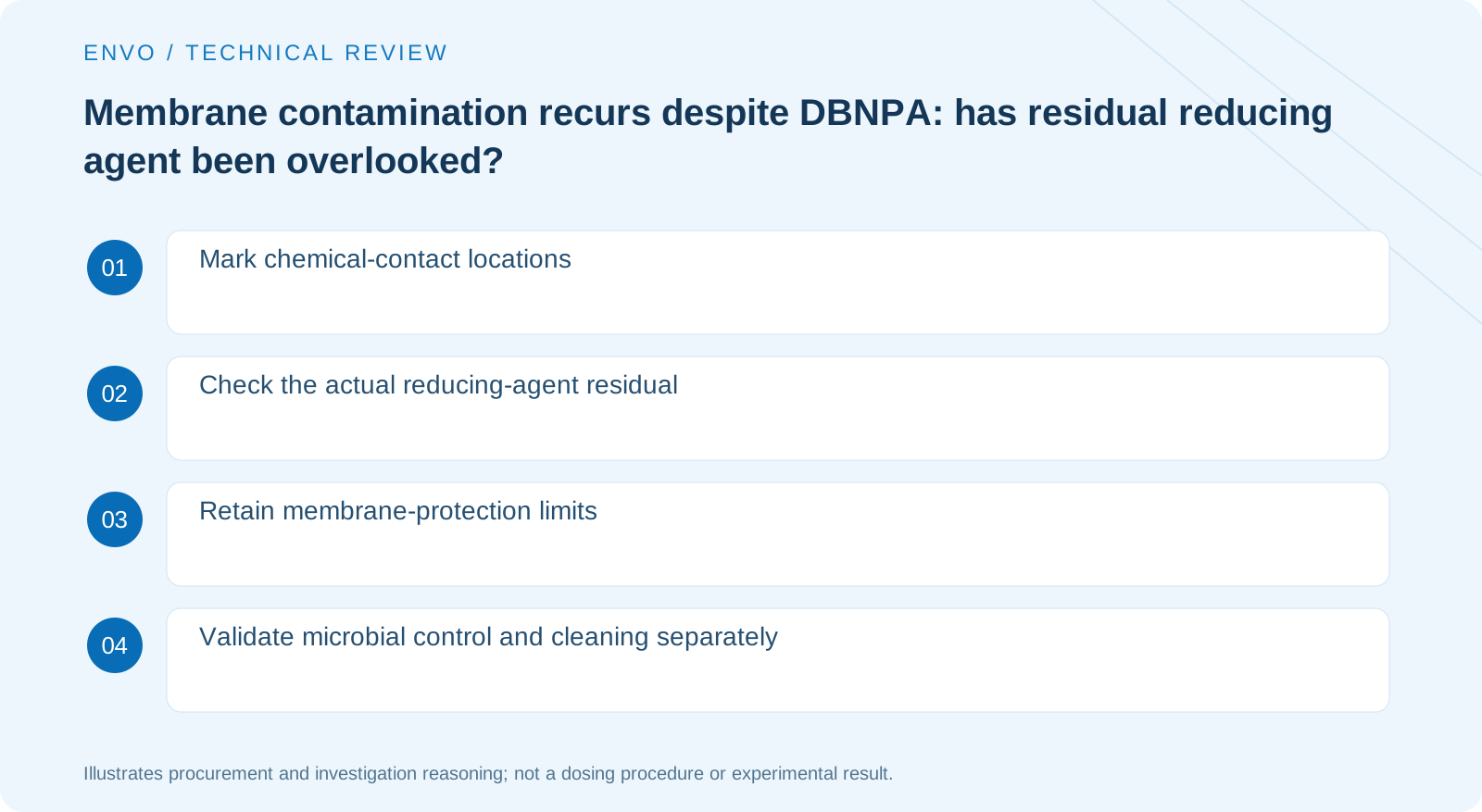
Mark oxidant, reducing-agent and DBNPA dosing points and sampling points, and describe valve positions during operation and cleaning. The DuPont FilmTec manual states that reducing agents can deactivate DBNPA. This is a specific compatibility warning, not an instruction for operators to directly change a dosing ratio. Knowing that a reducing-agent pump is running does not establish the actual residual at the DBNPA contact point; branches and return flows must also be included.
Use actual monitoring rather than nominal dose
Have technical personnel assess dechlorinated-water samples, reducing-agent residuals and corresponding methods, recording their relationship to DBNPA treatment periods. Changes in makeup-water load may mean existing settings no longer represent the same conditions. List chemical activity, complete formulation and method limitations separately; do not compare product volume as if it were active-ingredient mass. Untested residuals should be identified as variables requiring verification rather than assumed absent.
Do not remove membrane protection to enable microbial control
An identified interaction does not authorize independently shutting down dechlorination or bypassing protective interlocks. The membrane manufacturer, system manager and chemical technical team should jointly review procedures to resolve compatibility while protecting the membrane. Include membrane material, exact model and permeate use; do not extend one manufacturer's manual unconditionally to every brand and element. Every adjustment should identify abnormal-condition recovery measures and responsibility.
Distinguish insufficient active content from an unremoved contamination layer
Water-phase microbial results, membrane differential pressure and normalized flux answer different questions. Even when DBNPA performs as intended, existing fouling layers may still require cleaning. Conversely, reduced differential pressure after cleaning is not direct evidence of disinfectant capability. Separate records prevent every improvement or failure being assigned to one chemical name and help identify the specialist needed next.
Include compatibility and scale-up conditions in the inquiry
Attach process information, reducing-agent records, membrane models and recent differential-pressure trends to technical inquiries, stating current permeate destinations and quality requirements. Suppliers should identify formulation information, compatibility evidence and validation boundaries, not merely quote a higher concentration. Once selected, retain the validated product; solvent or stabilizing-system changes require review so an unchanged name does not conceal changed conditions.
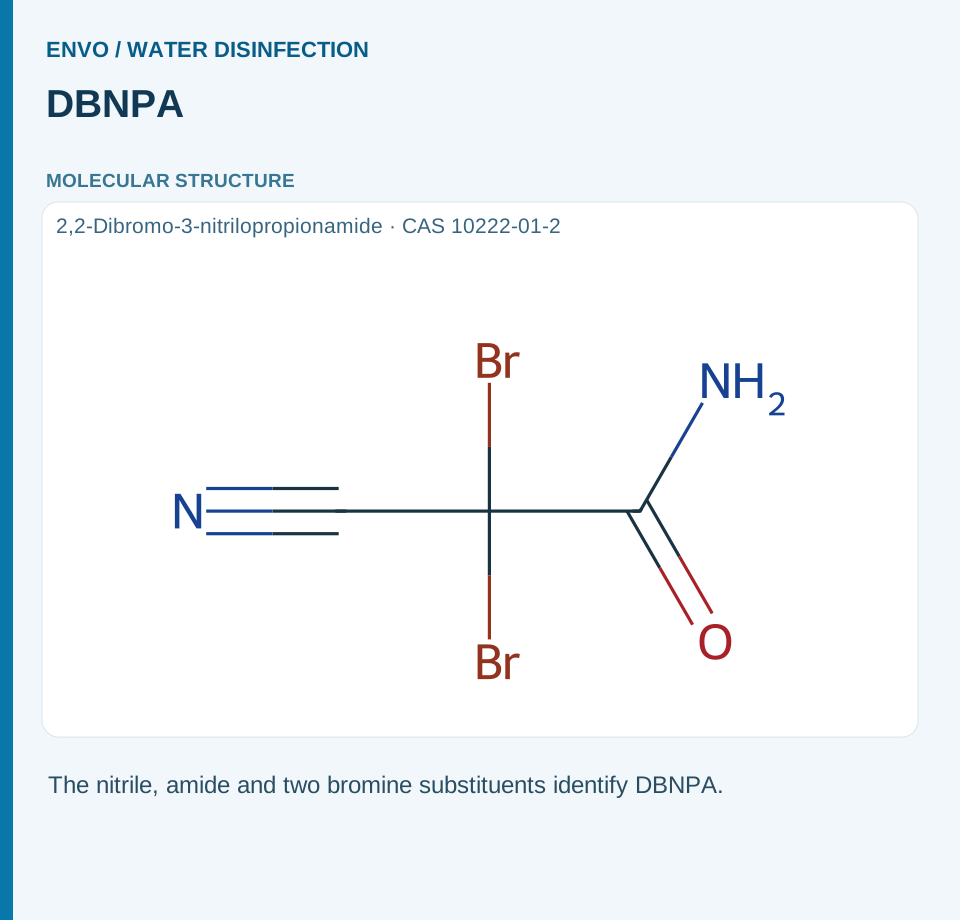
Mark the reducing-agent dosing point and DBNPA treatment location separately on the process diagram, recording actual circuits rather than relying only on drawings. Individual membrane-system application literature for both products does not establish unchanged effectiveness when both are present. If site information is inconclusive, obtain equipment and operating records so specialists can identify the section requiring validation. Do not casually alter existing membrane-protection procedures to address suspected deactivation.
Explore further
Can the DBNPA dose be increased to overcome every reducing-agent effect?
A generic adjustment is inappropriate; validate against actual residuals, the formulated product and membrane-manufacturer requirements.
Does unchanged differential pressure mean the chemical is completely ineffective?
Not necessarily. Controlling microbial activity and removing contamination layers are different tasks.
References
This article draws on publicly available technical information. Third-party sources do not establish ENVO product approvals, field testing or project experience. Confirm each use against actual supply documents and site conditions.