
First separate shared information from application-specific information
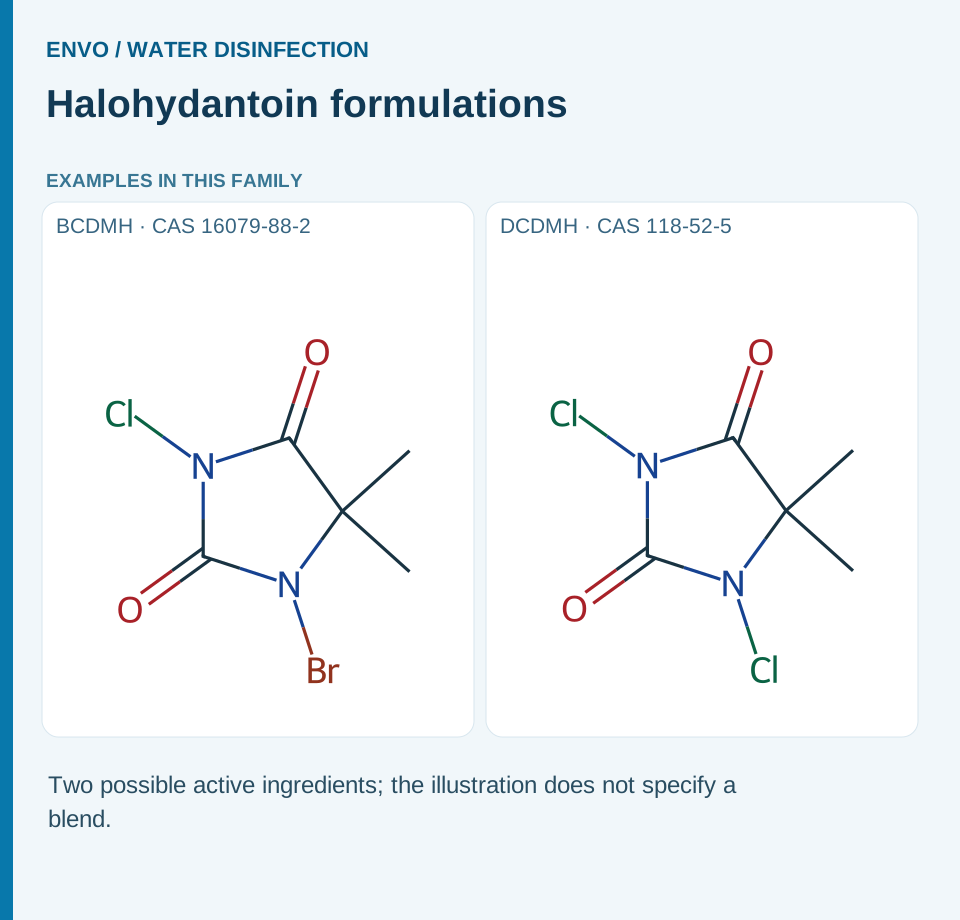
Chemical identity, basic specifications and batch traceability can form a common foundation, but specific uses, target objects and site procedures need separate support. A manufacturer selling recreational-water and industrial-water models does not mean the model at hand serves both settings. Check the actual label and destination-market documents, retaining model and version. Do not fill missing scope with a different product's use from the same brand.
Pools require comprehensive management of public contact
Routine pool and hot-tub management involves disinfection-related testing, water quality, filtration, circulation and operating records; CDC provides dedicated public recreational-water guidance. Facility managers should check applicable requirements during procurement. Industrial microbial trials alone cannot establish swimmer use. Hot-tub conditions differ from ordinary pools; a shared tablet photograph must not obscure different site-management requirements.
Cooling towers require attention to system conditions and operating objectives
Industrial-water circuits, loads, deposits, materials and discharge conditions may differ substantially from pools. Evaluate products using representative operating data coordinated with existing water-treatment procedures. A recreational-water reading cannot become a universal industrial control objective. Public-health-related risks also require the relevant system-management program; website procurement guidance cannot replace dedicated facility risk management.
Keep trial conclusions for the two scenarios separate
Identify the product, dosage form, application, conditions and method for every result, preventing one report from being reused across pages after its conditions are removed. Industrial-water trials should be presented as industrial-water evidence; pool projects still require their own use checks and site confirmation. Sharing data reduces repeated organization, not the need to respect its original scope.
Automatically include the operating environment in the inquiry
Inquiry forms should first establish location type and destination country, then collect relevant equipment, current products and key problems. Customers already using blended hydantoin tablets need not repeat a lengthy selection process, but should still confirm use. Sales replies should cite the appropriate document package instead of sending industrial-only literature to pool customers. This reduces repeated requests and improves communication accuracy.
A shared document library can retain core files for the same formulated product, but presentations to customers in different applications should include their respective uses and conditions. Pool customers should not see irrelevant default options simply because they arrived through an industrial-water article. Keeping the application field in the inquiry helps technical responses retain the correct context.
Explore further
Does the same chemical identity permit direct use across applications?
No. Specific formulated-product uses and site conditions still require verification.
Can a basic SDS be shared?
It should match the same formulation version, but an SDS alone does not establish suitability for every use.
References
This article draws on publicly available technical information. Third-party sources do not establish ENVO product approvals, field testing or project experience. Confirm each use against actual supply documents and site conditions.