First read the report's methods and test subjects
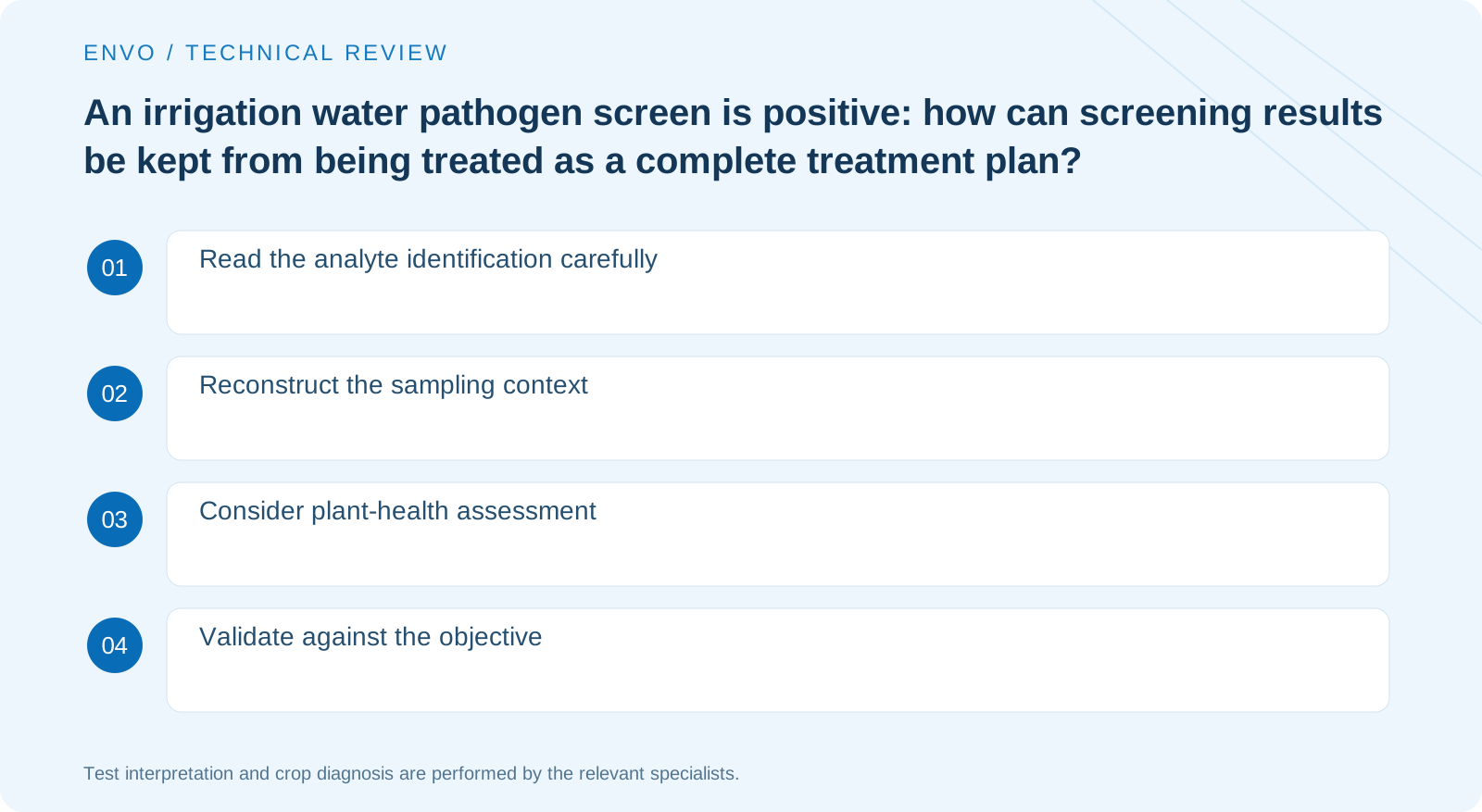
Check the pathogen or indicator targeted, sample source, method and interpretation. Screening methods may differ in detection and cross-reactivity. PNW irrigation-water literature notes situations requiring laboratory confirmation after screening, reminding readers that preliminary findings are not complete conclusions. The testing organization should explain each report's applicability limits.
Interpret each water sample in its sampling location and time
Record whether samples come from the source, recovery pond, post-treatment water or endpoints, together with recent rain, return-flow and maintenance events. Unidentified sources offer little guidance for corrective work. Confirm representativeness with the testing organization; one stagnant corner cannot represent all supply, while a normal main-line sample does not negate observed local problems.
When reading reports, check the target, method selectivity, qualitative or quantitative results and laboratory interpretation limits. Detection of a related group does not automatically establish that it causes current crop symptoms. Review water results alongside crop-protection investigations so actions address supported stages rather than use one positive label to decide an entire irrigation retrofit.
Distinguish clues in water from crop diagnosis
Water-test results may be associated with crop disease symptoms, but simultaneous occurrence alone does not establish causation. Specialists need to coordinate crop diagnosis, investigation of other transmission routes and examination of water circuits. For an unconfirmed target, first identify the additional evidence required rather than asking a supplier to promise a cure for every field problem based on a vague report.
Plan treatment validation around confirmed objectives
To assess a water-treatment approach, state objectives, actual water, pretreatment and users or contact targets. General tests in clear water cannot replace validation for specific pathogens and site conditions. Chemical and equipment approaches also require crop, material and return-to-use checks. This page provides no pathogen-cultivation, experimental-dosing or site-disinfection parameters.
Prepare traceable information for technical consultation
Attach original reports, sampling notes, system diagrams and existing crop-protection assessments, distinguishing confirmed facts from clues. Supplier responses should separate literature evidence from project measurements rather than exaggerate risk from positive findings to sell products. Retain methods and conditions in follow-up validation to establish real improvement relevant to the irrigation circuit.
Explore further
Can positive screening establish the source of disease in every crop?
No. Consider method limitations, sampling context and plant-protection diagnosis together.
Does one negative result eliminate the need for waterline management?
A single result cannot replace ongoing management and the applicable monitoring plan.
References
This article draws on publicly available technical information. Third-party sources do not establish ENVO product approvals, field testing or project experience. Confirm each use against actual supply documents and site conditions.