Move from the functional name to the complete identity
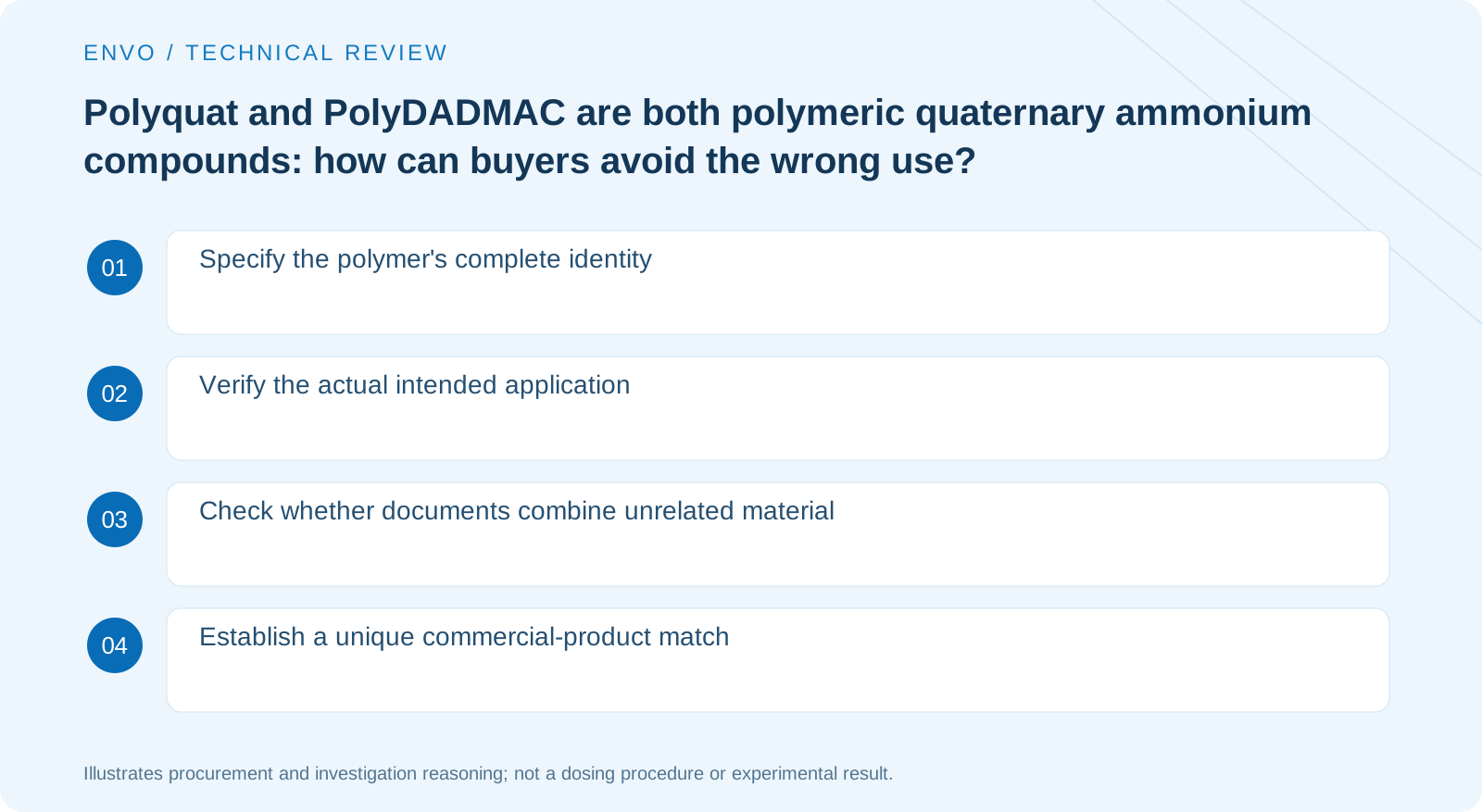
In algaecide product contexts, Polyquat refers to a specific polymeric active-ingredient approach, while PolyDADMAC usually appears in coagulation and water-treatment polymer contexts. Buyers should not group them together merely because both may be described in Chinese as polymeric quaternary ammonium compounds. Collect the existing label's full active name, chemical identity and uses and request item-by-item correspondence for candidates. 'Cationic polymer' alone does not establish that a product is the required algaecide.
Distinguish commercial-product functions from chemical properties
Positive charge or polymeric character provides only partial property background, not proof of an approved or confirmed biocidal or algaecidal use. Italmatch combination products and pool-product literature both illustrate the need to identify each commercial product independently. Do not transfer coagulant data to a disinfection page or infer suitability for public-contact pools merely because a polymer has water-treatment uses.
Check whether quotation documents combine unrelated material
Common warning signs include a product called an algaecide whose parameter table describes only coagulation performance, or an active name on the label inconsistent with the SDS identity. Ask the supplier to explain discrepancies and provide matching documents; do not assemble new information by selecting whichever details seem plausible. The website can link the two product categories to help customers distinguish them, but should not force them to share a generic image, CAS number or use description.
Determine comparison parameters from actual needs
For algae problems, verify the specific algaecide's uses and evidence; for particle aggregation, evaluate the relevant water-treatment product. Both problems may coexist but require separate assessment; similar names do not mean one product performs both tasks. Technical inquiries should let customers describe actual problems without mastering chemical nomenclature first, using clear application questions to route requests efficiently.
Establish a unique link between the back-end record and the order
Retain separate names, identities, functional categories and documents for each actual product rather than grouping different materials under one polymeric-quaternary-ammonium heading. Orders should use confirmed commercial descriptions, while website search may retain common aliases with distinctions. This lets customers using familiar terms find information without directing them into inquiries for unrelated products, reducing communication and delivery errors.
Showing the full name and main function together in search results helps customers who enter only 'polyquaternary ammonium' distinguish a coagulation approach from an algaecide approach. The two results can explain their differences through cross-references, but one product should not automatically replace the other in an inquiry. Backend tags help users find content; precise identity determines the final selection.
Explore further
Are all cationic polymers interchangeable?
No. Their specific chemical identities, functions and uses differ.
What if the customer knows only the name 'polymeric quaternary ammonium'?
First provide the current product label or describe the target problem, then verify the complete commercial-product identity.
References
This article draws on publicly available technical information. Third-party sources do not establish ENVO product approvals, field testing or project experience. Confirm each use against actual supply documents and site conditions.