
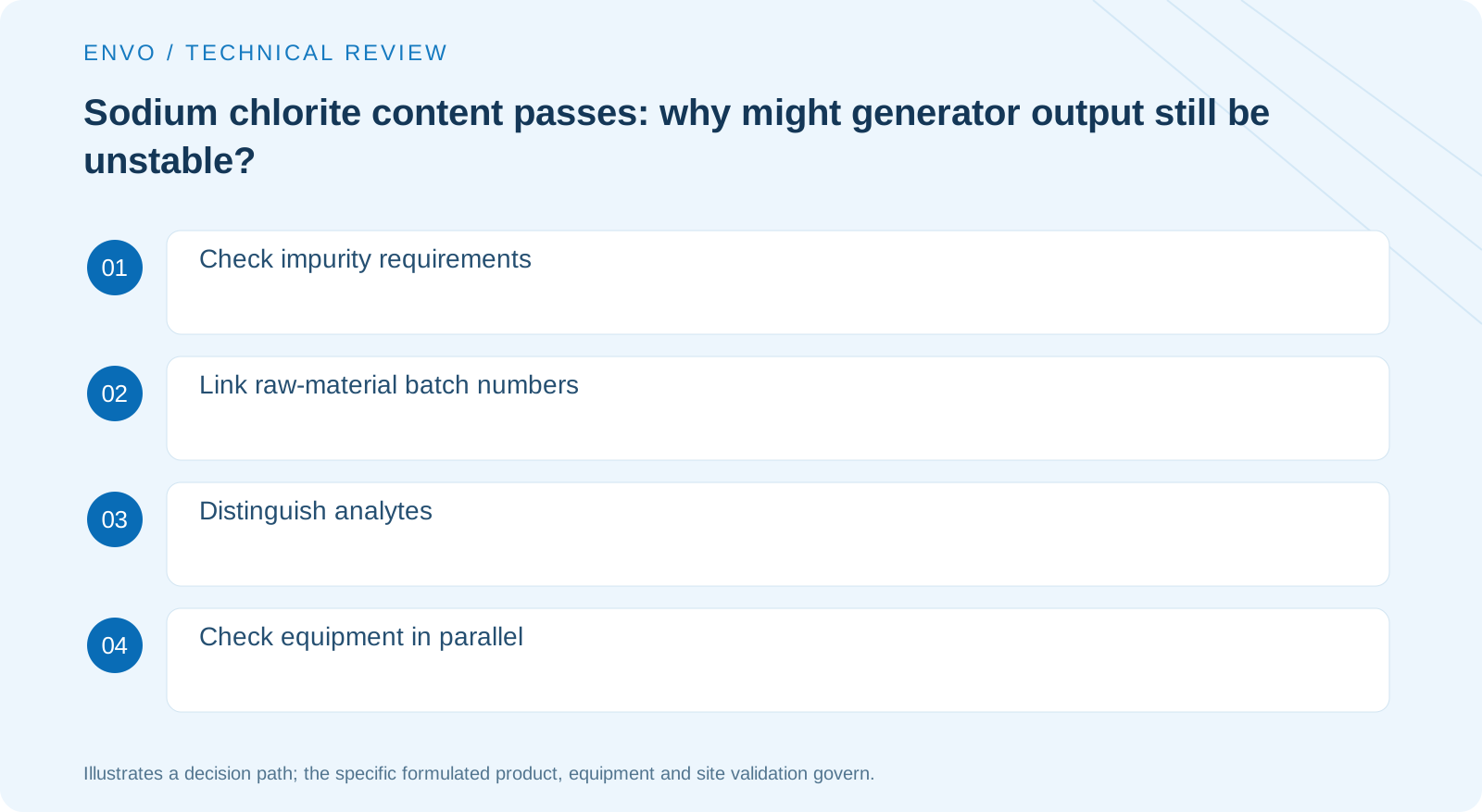
Separate main-component content from impurities
Obtain raw-material requirements from the equipment supplier and check whether they include impurities affecting the process. A generic industrial-grade supplier report may not cover all equipment-required tests. EPA raw-material information supports its precursor identity but does not establish impurity compliance for a particular batch.
Link raw materials and generated products by time
Record dates of batch changes, equipment maintenance, operational abnormalities and generated-product testing. If product fluctuations began before the raw material change, the new batch cannot be the sole explanation. If they began at the same time, other concurrent changes still need to be excluded. Retain supplier and site samples to support later verification.
Check whether testing can distinguish the substances concerned
Generator displays, total oxidizing capacity and specific chlorine-dioxide analysis may answer different questions. Confirm instrument analytes, sampling conditions and interference; a color reading is not a direct purity measurement. Complex samples should be interpreted by a competent laboratory or equipment supplier.
Investigate raw materials and equipment in parallel
Review metering, feedwater, maintenance and monitoring records and inspect under equipment procedures; do not independently change the generation formulation or raw material ratios. Equipment conformity to design and raw material conformity to specifications are separate conditions. Evidence for one cannot automatically replace the other.
Create comparable anomaly records
Use six record fields: date, raw-material batch, main content/impurities, equipment state, product-analysis method and anomaly location. Compare stable and abnormal periods with the same method; do not continue one trend uncritically after reagent changes. Original records, methods and sampling points support decisions better than one output concentration.
Review batch changes alongside equipment changes
For the period when abnormalities occurred, record raw material batches, equipment maintenance, load, generated-product test methods and sampling points. Two events occurring together do not establish causation. If raw materials were changed and equipment maintained simultaneously, timing alone cannot establish that the raw material was nonconforming. Complete records are needed to design a controlled comparison.
Separate conclusions on raw-material documentation, reliability of product analysis and equipment conformity. State gaps and responsible parties where any lacks evidence; two passing categories cannot replace the third. Third-party testing requests should specify exact material identity and target parameters, with retained samples linked to actual use batches.
Explore further
Does higher purity necessarily produce a better output product?
Main-component assay alone is insufficient; impurities and equipment compatibility also matter.
Can generation ratios be changed independently through trial and error?
No. Generation systems must be handled under equipment and professional procedures.
References
This article draws on publicly available technical information. Third-party sources do not establish ENVO product approvals, field testing or project experience. Confirm each use against actual supply documents and site conditions.
