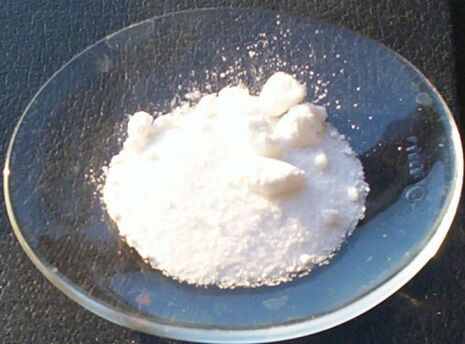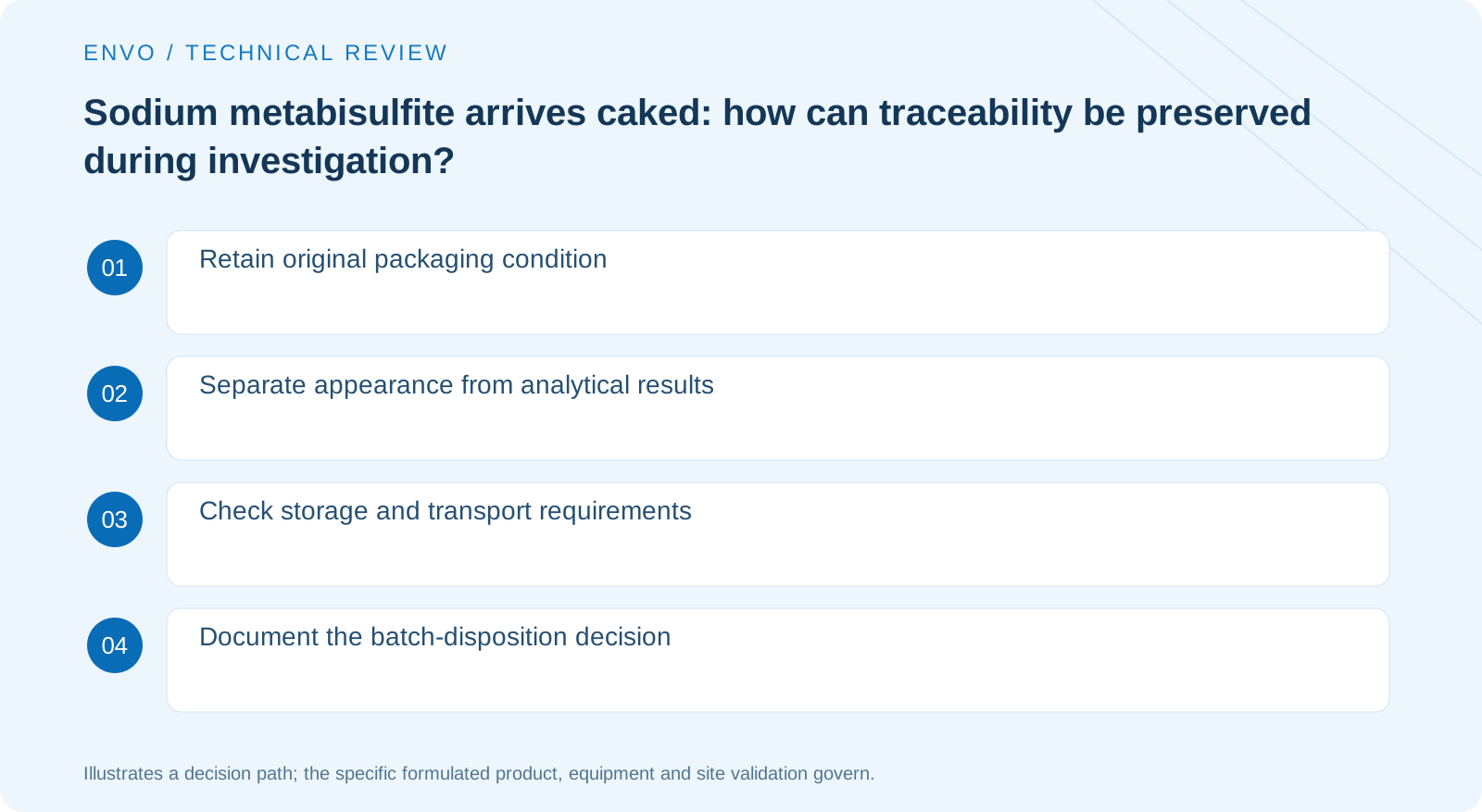
Record the original condition first
Before opening, photograph outer packaging, seals, labels and visible abnormalities, recording the number and location of affected packages. Do not open and mix all packages before sampling, as this may lose information about different batches or degrees of moisture exposure.
Distinguish appearance anomalies from chemical results
Caking may indicate storage or transport conditions needing investigation, but compliance with order guarantees requires analysis. Continued solubility alone does not justify release, and a change in shape alone does not establish total loss of function. Quality decisions should also consider actual-use requirements for metering and receiving.
Check agreed storage and transport conditions
Review the formulated product's packaging, storage and shelf-life requirements against transport and warehouse records. Do not substitute an online shelf life for another model. Keep batch reports, supplier-retained samples and site samples clearly matched.
Document the outcome of the response
Follow the quality procedure to determine quarantine, retesting, return, replacement or another evidence-based disposition; do not add substances independently to restore appearance. For membrane or other sensitive uses, also determine whether the abnormality affects equipment requirements. Retain the investigation findings and corrective measures so future purchasing can adjust packaging or receipt conditions appropriately.
Turn receipt anomalies into a traceable chain of evidence
Record the batch numbers, pallet positions, outer-packaging and liner condition of affected packages, together with any known transport or storage abnormalities. Record unestablished causes as unknown; caking alone does not establish moisture exposure or chemical change. Retained samples and sampling should follow quality procedures to avoid mixing intact and abnormal bags and losing information about their differences.
Divide rechecking into three questions: identity, critical specifications and physical condition for use. Passing composition tests does not necessarily establish convenient on-site metering, and restored appearance does not prove that all chemical specifications pass. Buyer and supplier should discuss acceptance, additional testing or returns and replacements against agreed parameters rather than debating whether photographs look 'normal.'
After resolving the issue, update the next procurement package with necessary packaging requirements, storage handover arrangements and acceptance checks. If equipment feeding is affected, the equipment supplier must confirm the response; do not use unapproved crushing or treatment methods. Retain records before and after corrective action to prevent the supplier from presenting the appearance after treatment as the original condition on arrival.
Explore further
Does caking always make a product completely unusable?
Recheck actual specifications and intended use rather than judge by appearance alone.
Can agglomerates be broken up and fed directly into equipment?
Confirm under quality and equipment procedures first; altering appearance cannot replace acceptance.
References
This article draws on publicly available technical information. Third-party sources do not establish ENVO product approvals, field testing or project experience. Confirm each use against actual supply documents and site conditions.