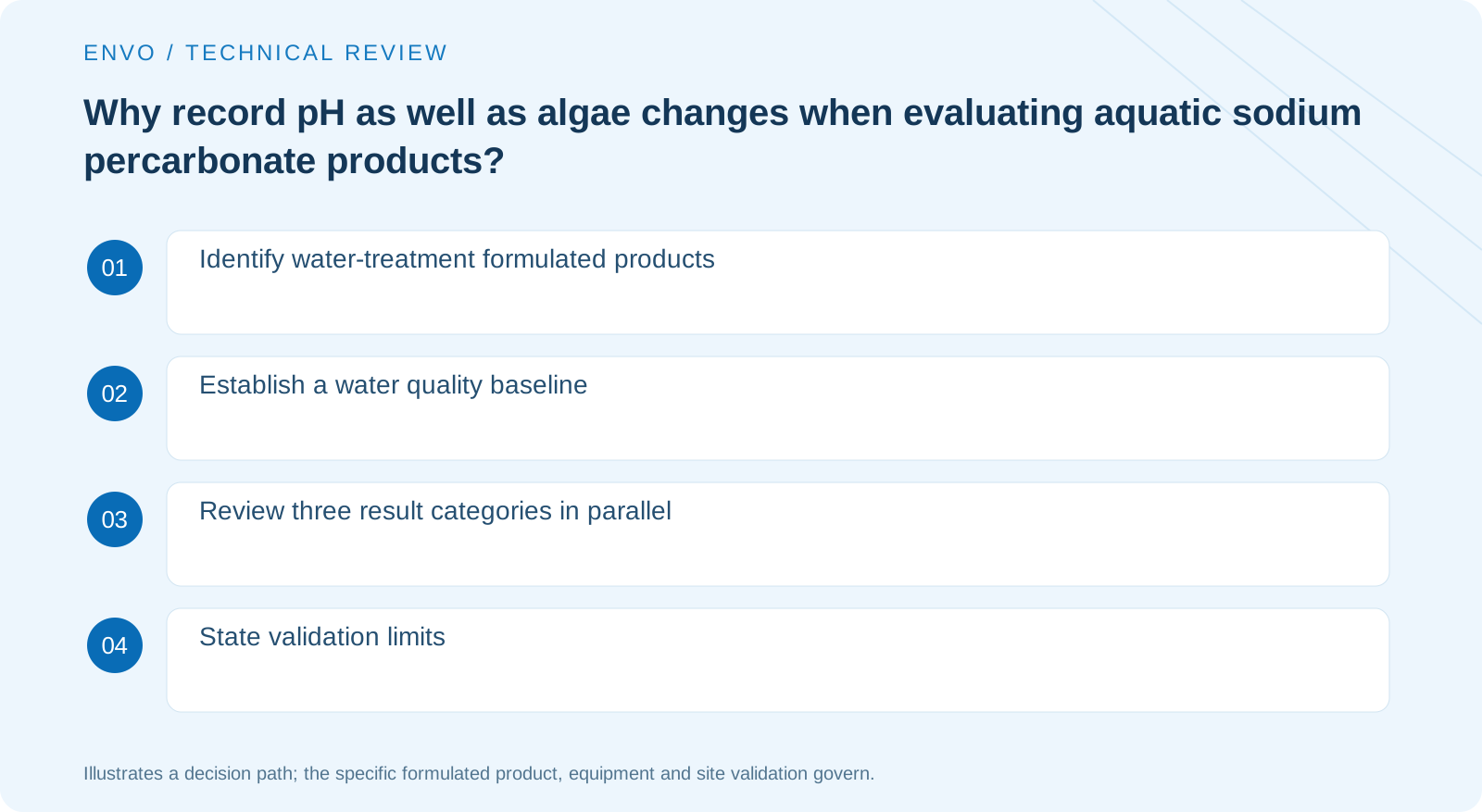
First confirm that actual formulated products are being compared
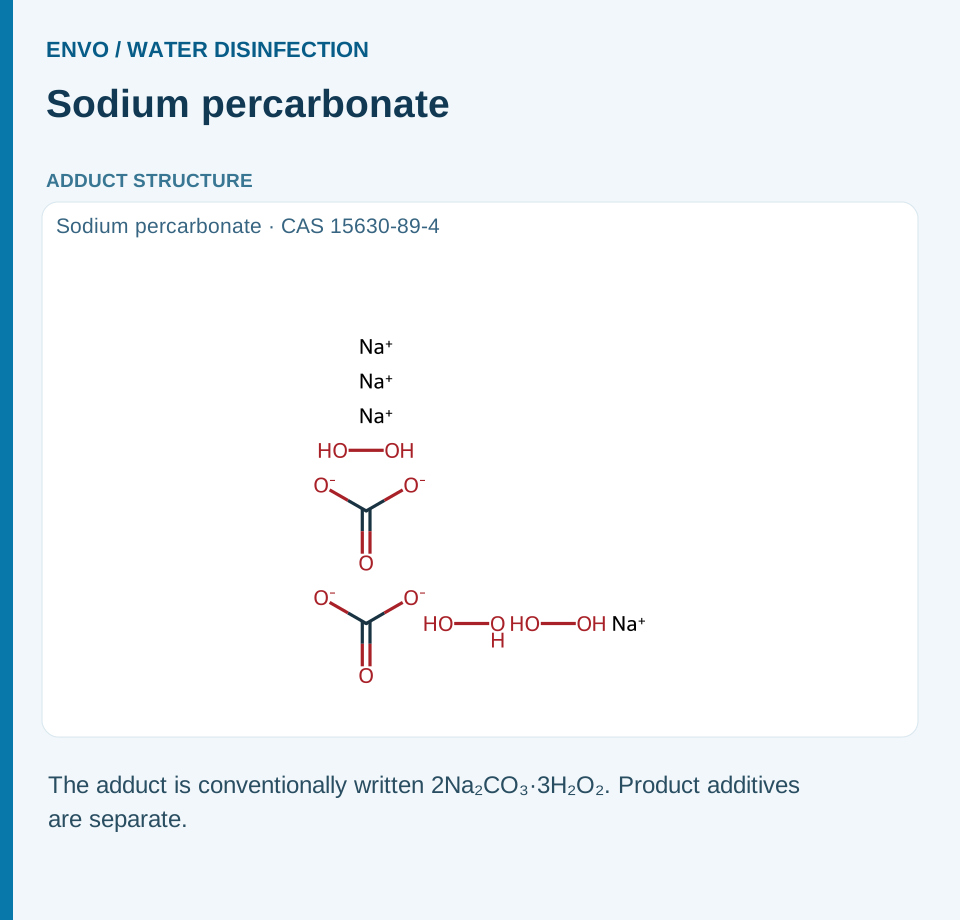
Sampling records should identify product model, batch and actual water use; tests of unformulated raw material must not be presented as results for a particular aquatic-use product. Composition helps explain the approach, but actual performance still depends on formulation and water quality. Results for different coatings or excipient systems should not be merged automatically.
Establish pretreatment water quality background
Collect pH, temperature, alkalinity and existing monitoring parameters for the target water body, with measurement methods and times. Include the carbonate system and source-water buffering conditions in the analysis. A single pH value does not represent daily variation, and results from another water body cannot establish how much the current system will change.
Record the three observation targets side by side
Use separate fields on the same form for changes in algae, residuals or related water quality, and observations of non-target organisms. Improvement in one parameter alongside an abnormality in another calls for further analysis; favorable data alone must not be retained. A laboratory may add relevant tests where necessary. The test plan should define in advance which changes trigger consideration of a suspension.
Set explicit limits on the conclusion
Conclusions should state the applicable water sample, formulated product, test conditions and scope of observation. For example, 'a change was observed under the conditions of this water sample' is more accurate than 'suitable for all ponds.' Scaling up to an entire water body also requires consideration of spatial differences, flow and ecological conditions. Public formulated-product labels can help verify scope but cannot replace the current site assessment.
Record both benefits and costs of the trial
Record algae changes, pH and related quality, and non-target observations side by side, with raw-water background and product identity separately. Add methods and times so morning quality and evening algae photographs are not treated as simultaneous. Mark untested residual or ecological items unassessed rather than fill gaps with clarity or lack of odor.
If algal indicators improve but water quality changes unexpectedly, pause expansion of the trial's application scope and investigate links with treatment conditions. If transparency changes without a clear algal-test trend, retain the discrepancy and examine particles or other background factors. Both interpretations guide next steps better than merely 'effective' or 'ineffective.'
The report may conclude with spatial coverage, flow and sensitive receptors requiring confirmation before scale-up. These are topics for field validation, not a website-generated scale-up factor. Any expansion of treatment should be decided by professionals responsible for the water body based on actual conditions.
Explore further
Does no noticeable pH change mean no ecological impact?
No. pH provides only part of the water quality information.
Must every test conducted by a manufacturer be replicated?
Design validation around actual use; manufacturer documents help identify conditions and restrictions.
References
This article draws on publicly available technical information. Third-party sources do not establish ENVO product approvals, field testing or project experience. Confirm each use against actual supply documents and site conditions.