Provide water quantity and quality together
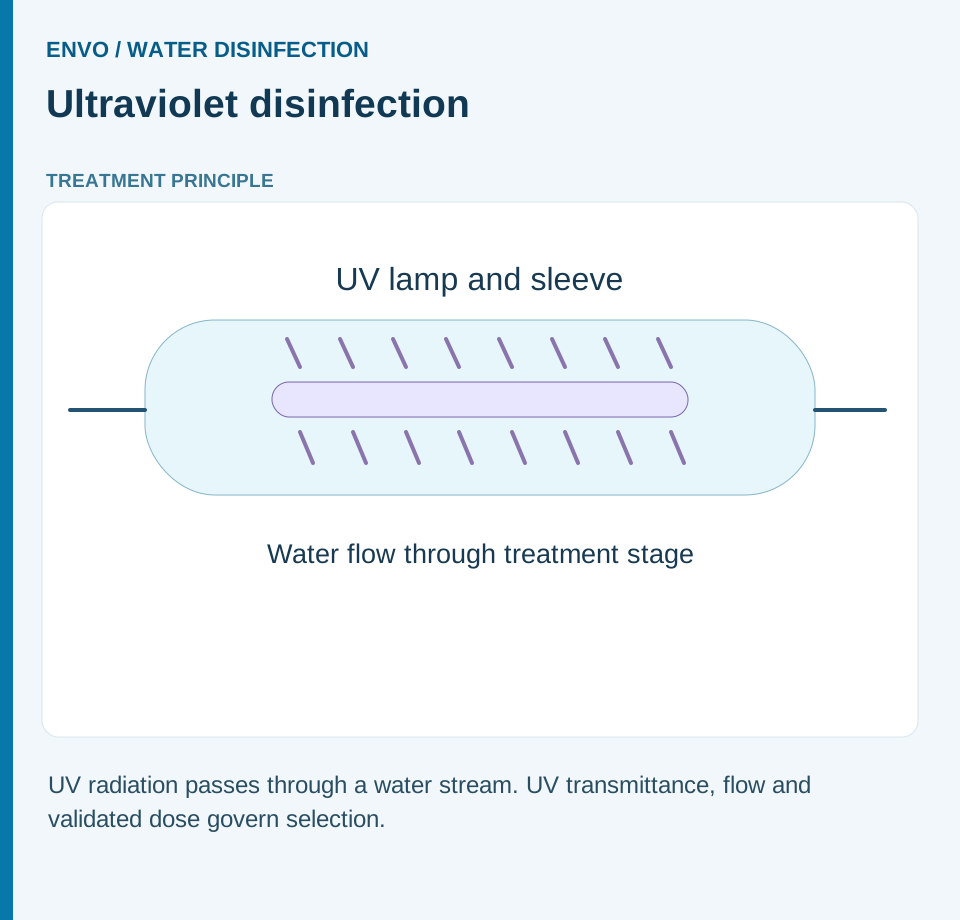
Record the actual flow range and applicable water-quality information such as UV transmittance, describing seasonal and abnormal changes. DWI notes that UV performance depends on water quality and flow, so clean-water ratings do not reliably establish treatment capacity for complex raw water.
Check which reactor the validation covers
The EPA UV toolkit centers on reactor validation and operating limits. Check whether the report's model, configuration, sensors and control method match the quoted equipment. Similar appearance or identical power does not establish the same validated configuration.
Assess worst-case conditions rather than the best result
Ask about the validated limits for flow, UVT, lamp condition, aging and fouling. Do not compare only results obtained under the most favorable test conditions. If site water quality exceeds the range, address it during design rather than revising promotional parameters after installation.
Make acceptance decisions reproducible
Request the information needed for operating monitoring, alarms, maintenance and records, and define when operation is considered outside the validated range. Target microorganisms and actual use must also correspond; claims for aquarium or decorative-water equipment cannot establish drinking-water suitability. Engineering procurement requires a combination of verifiable performance and maintainability.
Make tender specifications address actual water quality and flow
Equipment comparisons should separately record treatment objective, representative water quality, expected flow range, validation-report conditions and monitoring plan. Lamp power or count describes some hardware but not validated outcomes for target water passing through the reactor. Align operating conditions before comparing differently advertised capacities.
Confirm validation matches the exact reactor, lamp configuration, operating mode and assessment method and identify site conditions that must remain within scope. A report does not establish coverage of every water environment. For conditions outside scope, equipment providers must propose acceptable engineering solutions; buyers cannot independently relax limits.
Acceptance should also define how water-quality and operational monitoring detect deviations and how the system handles anomalies. UV is an engineered disinfection approach, not a chemical purchased by raw-material purity. Including these questions in inquiries helps compare actual capacity and maintenance responsibility rather than select similar-looking equipment by rated power alone.
Explore further
Does doubling power double treatment capacity?
That conclusion does not follow. Examine reactor and operating-condition validation.
Can a validation report for one series cover every model?
Confirm the configuration and scope explicitly covered by the report.
References
This article draws on publicly available technical information. Third-party sources do not establish ENVO product approvals, field testing or project experience. Confirm each use against actual supply documents and site conditions.