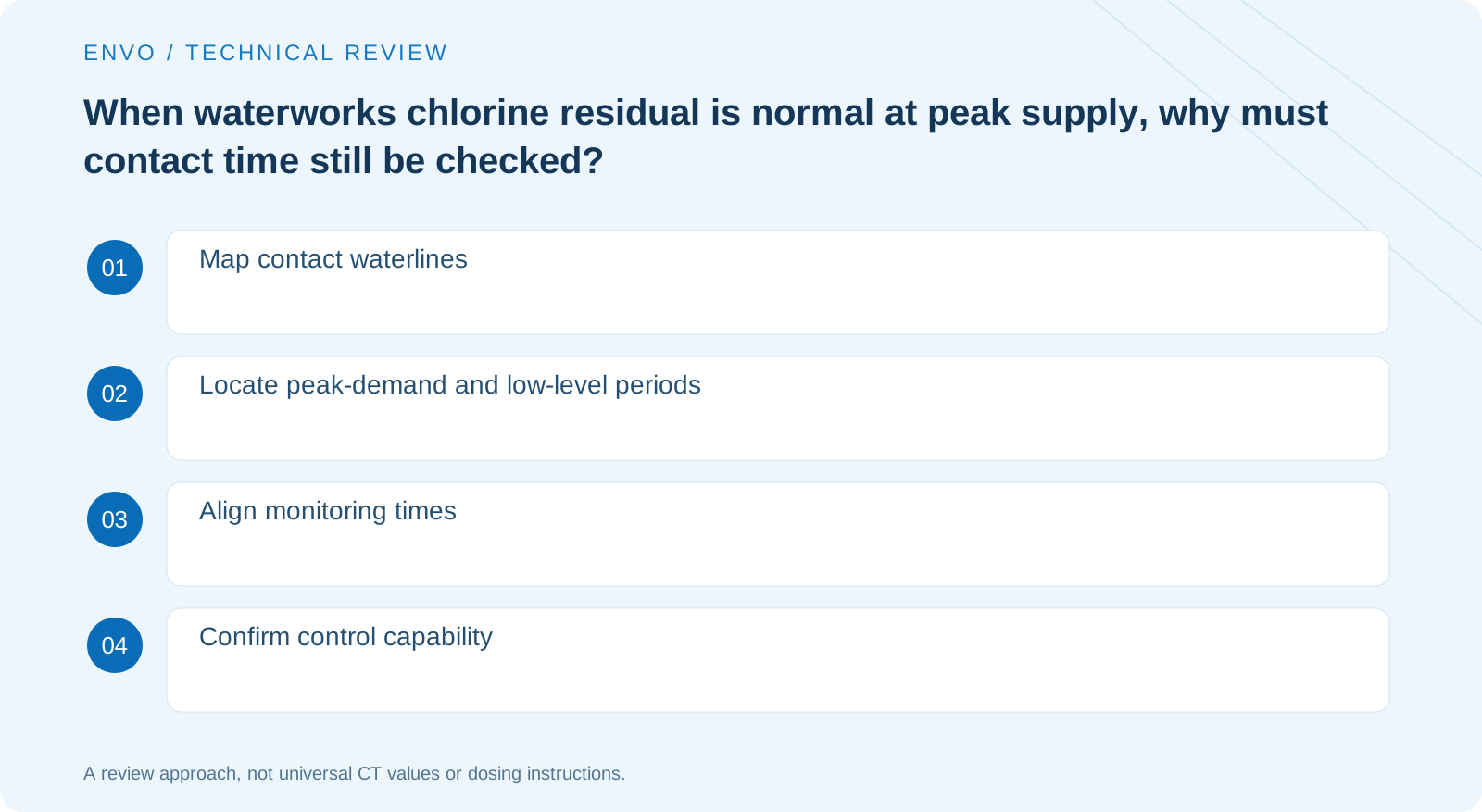
Connect the dosing and evaluation points along a defined waterline
First map chemical addition, mixing facilities, contact tanks, sampling points and the first supply outlet. An online analyzer connected beside a tank does not automatically measure the assessment outlet. Instrument piping drawings should identify sample-line length, sampling delay and any additional treatment. This distinguishes real main-process changes from sampling-branch lag and avoids combining flow and chlorine residual from different times into one judgment.
Identify the worst-case combination of operating conditions
EPA disinfection-assessment information includes flow and effective contact conditions. Verification must go beyond nominal contact-tank volume divided by daily average flow: water-level changes, baffle condition and parallel tanks out of service alter effective pathways. Initially identify peak effluent flow, minimum normal level and maintenance switching conditions, then have operations or design personnel confirm calculation bases and applicable hydraulic evidence.
Create a data package with consistent timing
Export effluent flow, basin level, temperature, pH, residuals at assessment points and dosing-equipment status on one timeline. If only daily averages exist, obtain critical-period records before concluding that chemical supply is inadequate. Examine continuous changes before, during and after peaks, and record interruptions from sampling or calibration. An anomaly confined to one instrument calls for checking the measurement chain before discussing process adjustments.
Express purchasing requirements as control capabilities
Beyond the chemical name, inquiries should state peak and normal operating ranges, existing pumps and interlocks, a contact-stage diagram and the basis for control objectives. Proposals should explain how dosing and monitoring remain verifiable as flow changes, rather than providing only packaged-product concentration. Inadequate contact capacity may concern structures or operating methods; a higher concentration reading cannot be promised to solve it. Plant professionals provide final confirmation under applicable standards.
Use the same operating conditions to explain quotations for different solutions
When comparing two proposals, give both suppliers the same peak-flow figures, normal liquid levels and operating constraints, and ask them to identify information still requiring confirmation. If one uses average daily flow and the other instantaneous peak flow, comparisons of equipment capacity and chemical consumption lack a common basis. List uncertain hydraulic conditions for design review rather than allowing sales staff to insert a more favorable assumption into a quotation. Retain the operating-condition version used for comparison so that later changes can be traced to conclusions requiring review.
Explore further
Can compliant chlorine residual replace process validation?
No. Residual, effective contact and water-quality conditions answer different questions and should be evaluated together.
Must the entire plant design be provided?
Initial discussions can start with a local flow diagram from the dosing point to the assessment outlet, plus flow and level records; provide further drawings as needed later.
References
This article draws on publicly available technical information. Third-party sources do not establish ENVO product approvals, field testing or project experience. Confirm each use against actual supply documents and site conditions.