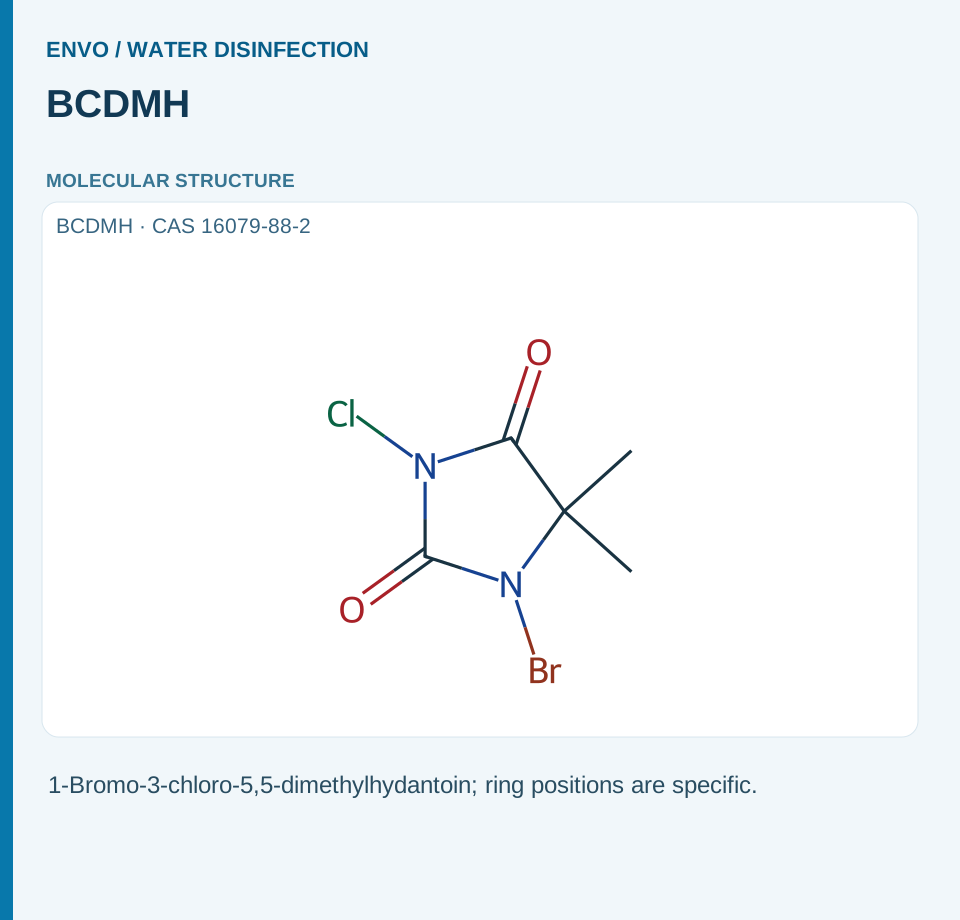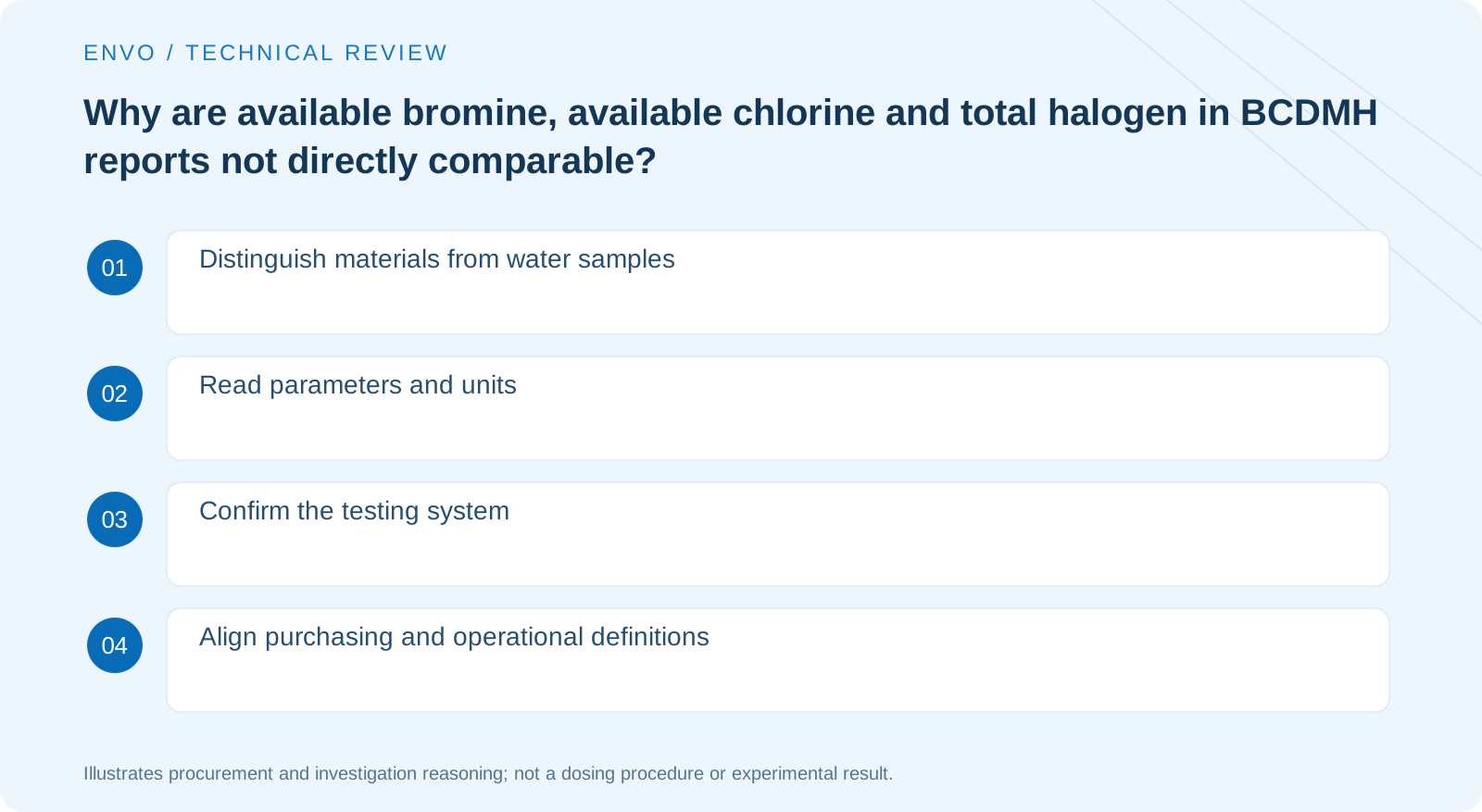
First separate material specifications from water quality parameters
Raw-material or tablet reports describe supplied material, while pool or recirculating-water monitoring describes water after use. Even if both mention available bromine or chlorine, they measure different objects. EPA halogenated-hydantoin technical information lists different actives and commercial dosage forms, highlighting the need to confirm composition before purchase. A family-wide average content cannot assess one batch of formulated BCDMH.
Read the units following each number
Ask the report provider whether the measurement is active-ingredient mass fraction, available halogen or oxidizing capacity expressed as another substance, and which calculation basis is used. ICL stabilized-bromine information illustrates different bromine and chlorine expression bases, showing how units change numbers; it does not define actual BCDMH supply specifications. Do not choose the largest-looking percentage from different products to rank purchasing options.
Residual monitoring must also match the treatment system used
Water-sample methods must suit the actual disinfection chemistry and instrument range. Operators should state the substance in which results are expressed rather than reuse chlorine-system headings unchanged for bromine. With multiple oxidants, ask testing personnel to confirm selectivity and interference. Renaming a heading or applying an unvalidated conversion cannot resolve different measurands.
Create a comparison table that supports direct verification
For each candidate, list full product name, active identity, concentrate/solid test parameters, methods, units and actual uses, with site-monitoring parameters separately. Mark missing fields not supplied rather than assume zero. If reporting bases differ, obtain laboratory explanations before calculations instead of leaving buyers to infer chemical conversions from names.
Use consistent definitions in orders and operational handover
Purchasing acceptance should define delivery parameters and operating documents should define water-sample parameters, linked through the specific model and use. Recheck method suitability after supplier changes or adoption of blends. ENVO inquiries can include report screenshots and instrument models, explaining whether the issue concerns quotations or site residuals. Technical replies can then address the problem without repeating a general account of all bromine products.
Whether an instrument displays chlorine or bromine units must match product reports and facility control documents. Identical numbers do not make measurements interchangeable, and available halogen in concentrate is not the same test target as pool water. Preserve original bases and identify converted values. Responsible personnel should confirm actual analysis and control under approved methods.
Explore further
Can available bromine and values expressed as chlorine be ranked directly?
No. First confirm that the parameters and reporting bases match.
Does commercial-product content represent the residual in pool water?
No. They are different subjects requiring their own applicable methods.
References
This article draws on publicly available technical information. Third-party sources do not establish ENVO product approvals, field testing or project experience. Confirm each use against actual supply documents and site conditions.