First distinguish total quantity from chemical form
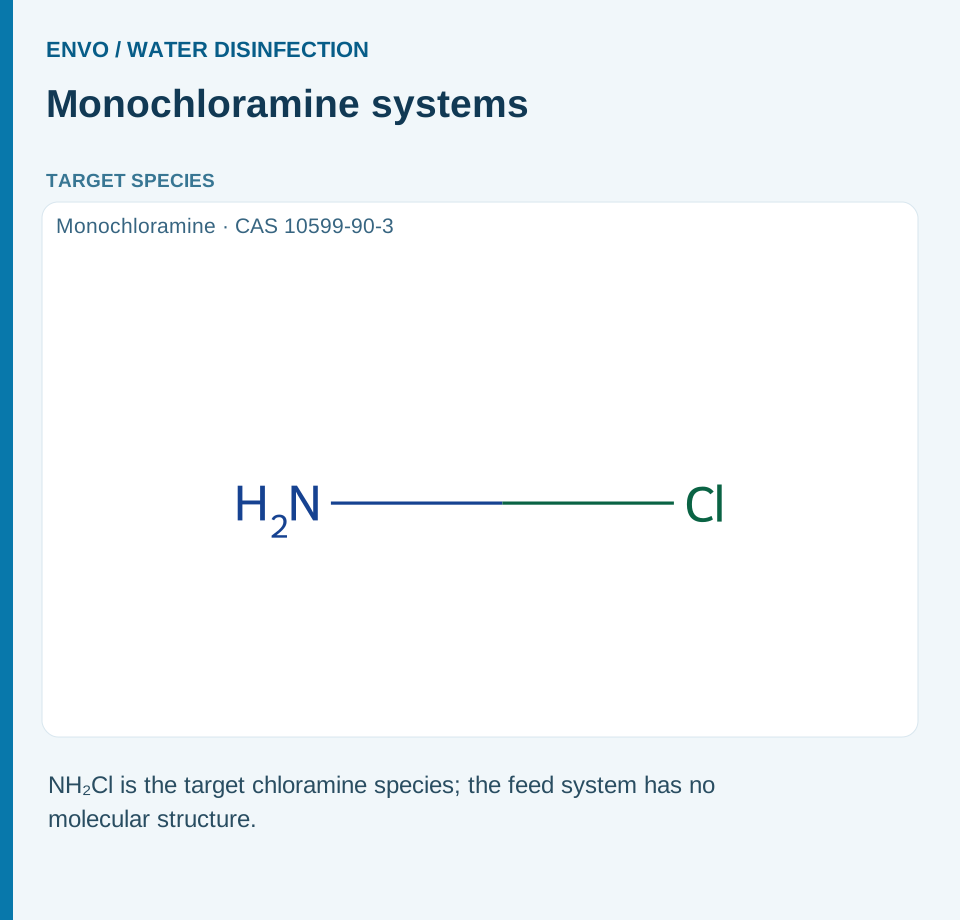
EPA's discussion places monochloramine within a specific drinking-water disinfection context. 'Total chlorine is present' does not establish that all of it is the desired species. When purchasing equipment and testing support, align analytes with operational objectives rather than providing only a total-chlorine number.
Check whether monitoring-point coverage is complete
Results may differ at the treatment-plant outlet, storage tank and distribution endpoints. A single nearby sampling point does not represent the entire network. Record location, time and flow context, and establish monitoring under system design and the water-management plan rather than choosing only the easiest sampling locations.
Consider related water quality trends
Monochloramine systems also require attention to applicable factors such as free ammonia, nitrification and water age. EPA distribution-system nitrification guidance explains that several conditions affect stability. One abnormal total-chlorine result should not directly trigger changes to generation or dosing; specialists should assess the full picture.
Include result-interpretation capability in the purchasing scope
System supply should specify monitoring methods, records, maintenance and abnormal-event response rather than deliver generating equipment alone. This page provides no chlorine-to-ammonia ratios or on-site generation instructions. Operating judgments require consistent evidence on chemical species, distribution and water quality.
Build distinct levels of water quality evidence that do not replace one another
First record the precise analyte for total chlorine or related residuals; second, system operation and network condition; third, end-use water-quality and microbial evidence. A normal number at the first level does not remove the other two. EPA chloramine information explains its supply-disinfection role, not completion of a particular facility's comprehensive assessment.
Link readings to water age, makeup and branch context rather than treat plant outlet and endpoints as identical conditions. If methods cannot distinguish relevant components, specialist analysts should define further tests. This article provides no universal residual target and does not describe total chlorine as a selective monochloramine analysis.
Acceptance forms should separately cover source-water treatment, disinfection, distribution management and final use, naming responsible parties and evidence for each. Customers can then identify missing quality information, monitoring corrections or system reassessment needs. Defined treatment objectives and method limits offer more technical value than a homepage claim that maintaining residual chlorine guarantees long-term safety and better reflect engineering decisions.
Explore further
Is total chlorine the same as monochloramine?
They are not equivalent. Use analytical methods supporting the actual decision.
Does a normal inlet result represent every endpoint?
No. Actual water storage and distribution conditions must be covered.
References
This article draws on publicly available technical information. Third-party sources do not establish ENVO product approvals, field testing or project experience. Confirm each use against actual supply documents and site conditions.